What Textured Boards Are Made For
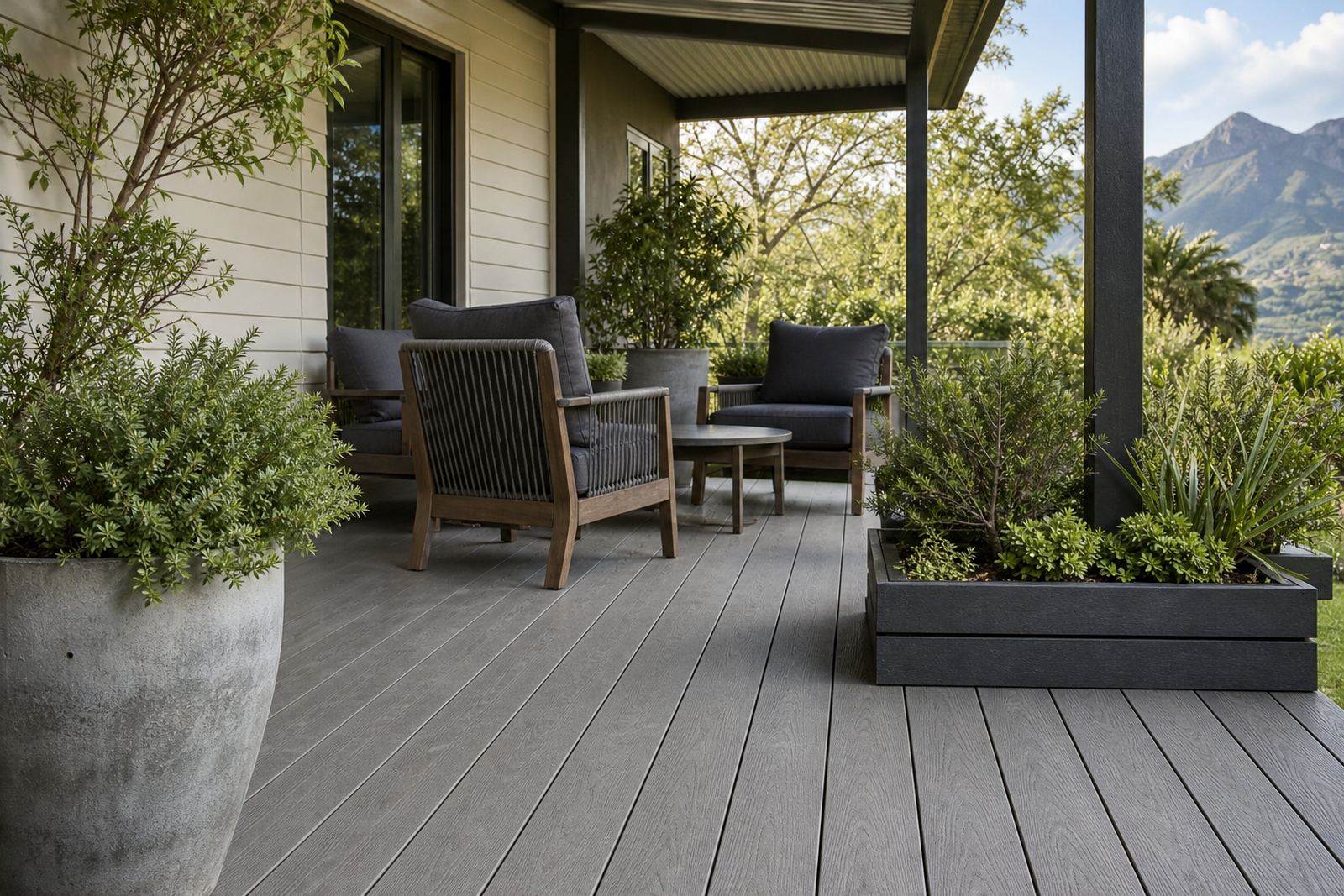
Textured boards are recycled plastic lumber boards with a surface finish that gives more purchase underfoot than a plain smooth board. They are used where people walk often, where water may be on the surface, or where staff and visitors need a steadier step. In Cape Town, George, Durban and other coastal towns, that extra texture is useful on decks exposed to moisture, sea air and regular cleaning.
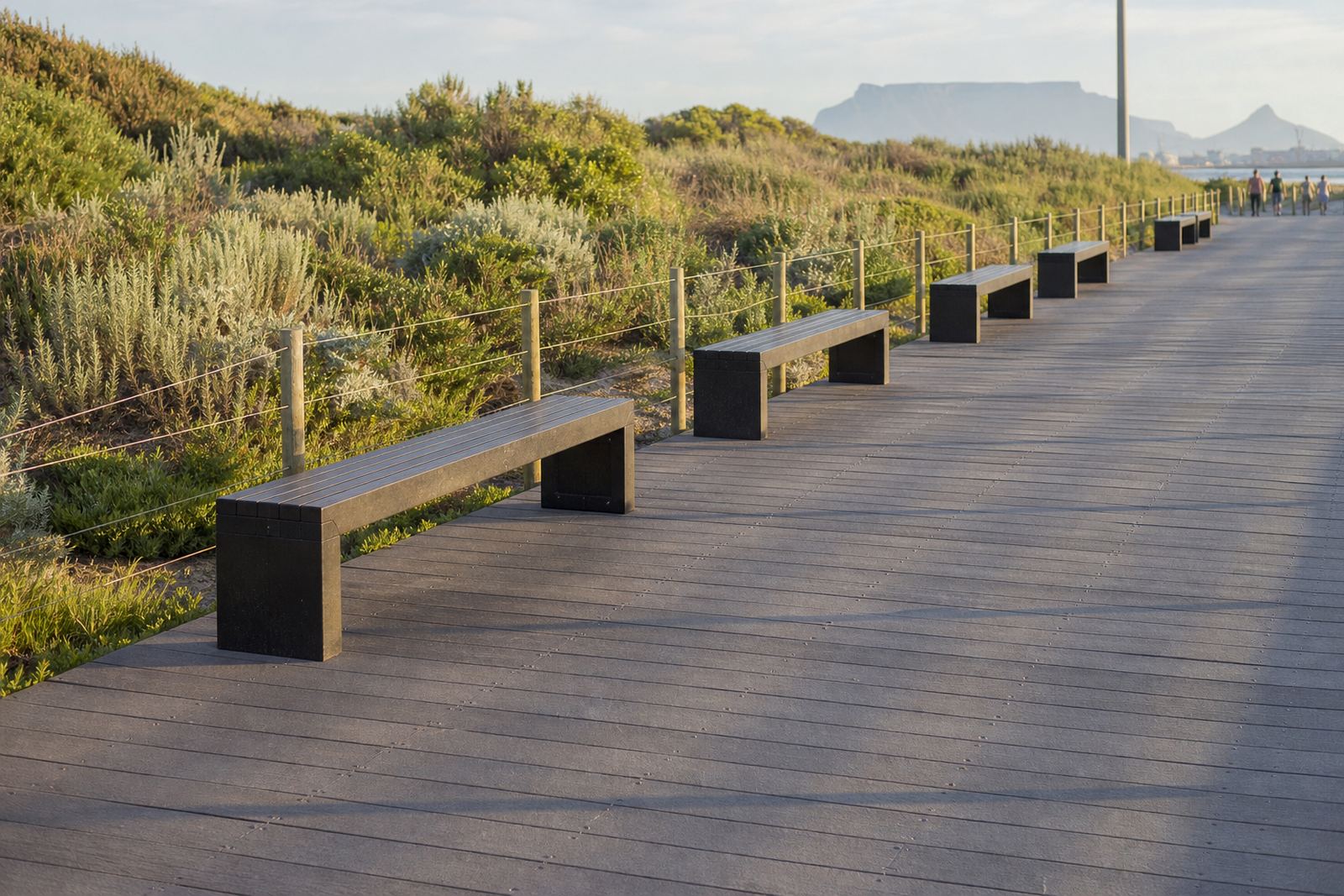
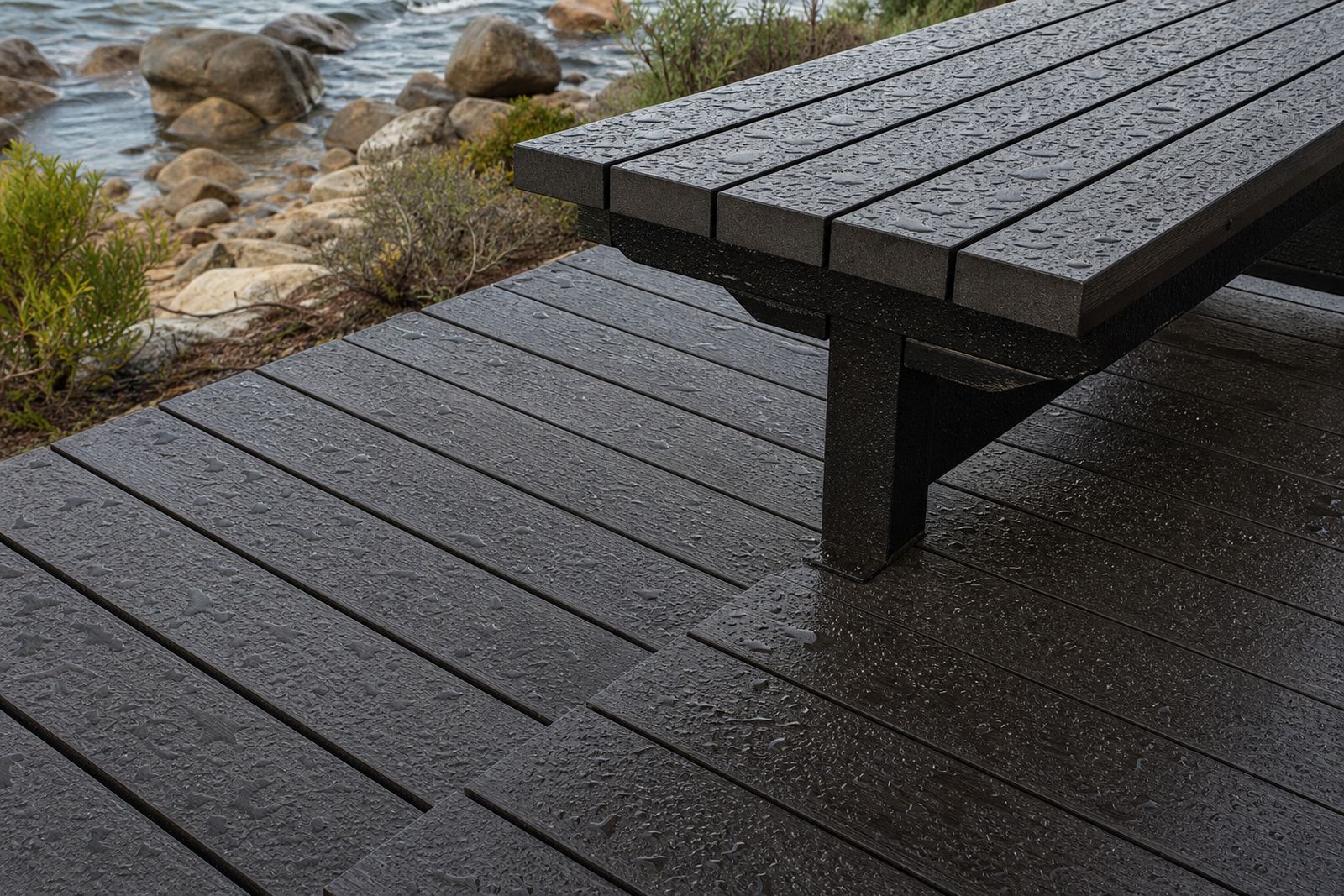
The material is suited to outdoor use because it does not take on the same problems as timber in wet conditions. It does not need sanding, sealing or staining, and it is often chosen for pathways, pool surrounds, boardwalk-style areas and seating platforms. For projects in Paarden Eiland and beyond, the aim is simple: a hard-wearing surface that looks neat and stays serviceable with basic care.
Sizes, Profiles and Finish Options
Textured boards are typically supplied in standard lengths and section sizes suited to decking and bench work, with options chosen according to the span, foot traffic and fixing method. Width and thickness can vary by application, so it helps to confirm the intended use before ordering. Boards may be plain on one side and textured on the other, or textured through the wear surface depending on the profile supplied.
- Common use: decking, walkways, platforms and bench seating components
- Surface: textured for added grip, especially in wet or dusty areas
- Colour: usually available in natural, brown, grey or similar outdoor tones
- Cutting: can be cut to size on site with standard woodworking tools
- Fixing: installed with suitable corrosion-resistant fasteners and supporting structure
Because recycled plastic lumber expands and contracts differently from timber, board length, support spacing and fixing details need to be planned properly. That is part of the reason site measures and layout planning matter before material is ordered.
Where Textured Boards Suit Best
These boards suit private homes, hospitality spaces, body corporate common areas, schools, lodges, retail forecourts and municipal-type walkways. They work well anywhere that sees regular foot traffic and needs a surface that is easier to maintain than timber. In coastal places such as Somerset West, Bellville and Durban, they are often considered for areas where moisture, salt air and afternoon rain can shorten the life of untreated wood.
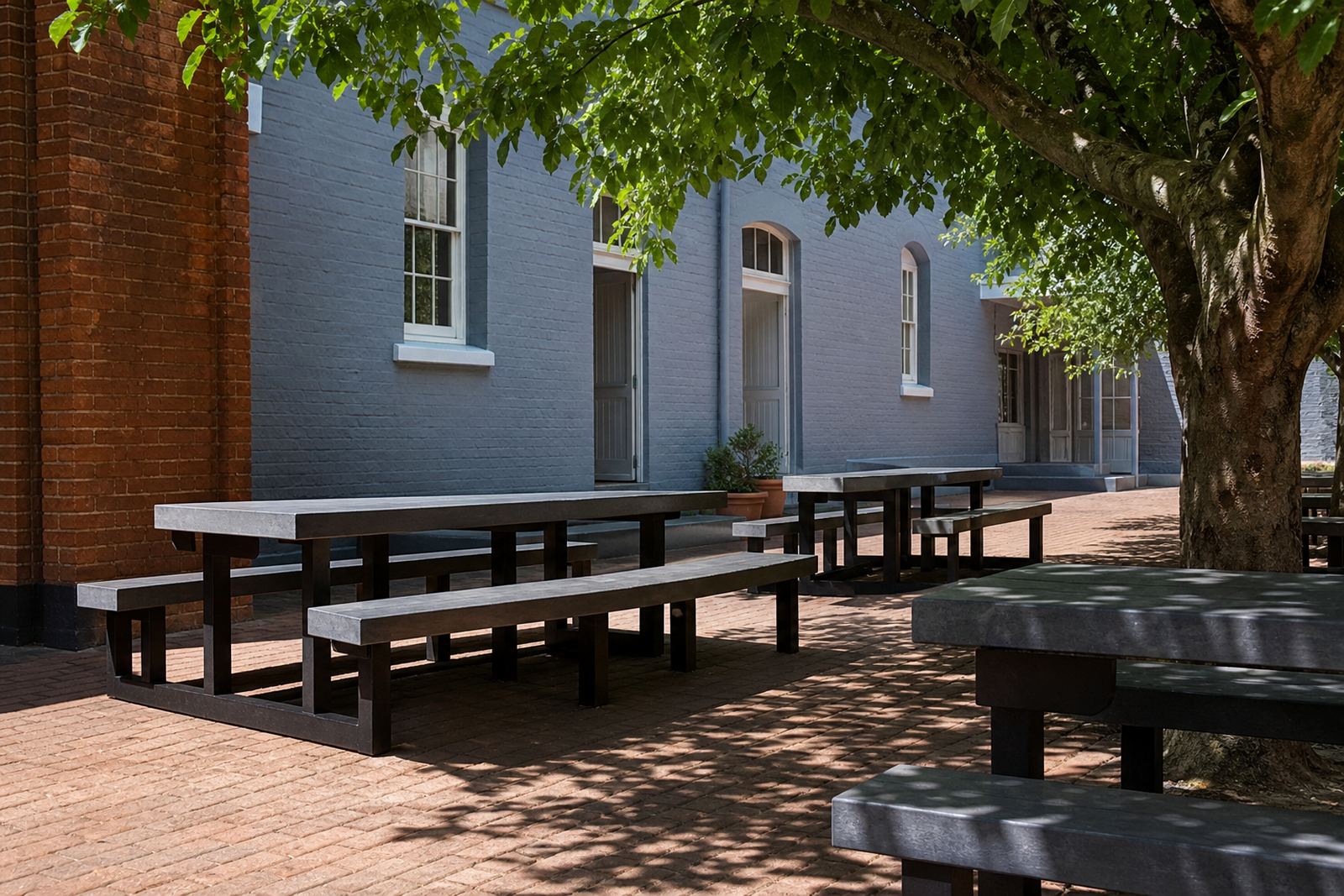
They are also a practical option for bench tops and seat slats, especially where public use means frequent cleaning and a need for a stable surface. In commercial settings, the texture can help reduce slipperiness in shaded areas or on routes that stay damp after watering, mist or sea spray. For residential use, the look is neat and practical, with a finish that suits courtyards, patios and garden paths.
- Good fit for pool areas and garden paths
- Useful on ramps, stairs and landing surfaces where grip is important
- Suitable for seat tops and backrest components on outdoor benches
- Handy for coastal and high-moisture sites where timber needs more upkeep
Installation, Fixings and On-Site Requirements
Textured boards are installed onto a prepared substructure, normally with spacing that allows for movement and drainage. The support frame needs to be straight and level so the finished surface stays even underfoot. Installation is usually straightforward for an experienced team, but it does need careful measuring, clean cuts and the right fasteners. Corrosion-resistant fixings are important, especially in coastal areas where rust can become a problem quickly.
No heavy power or gas setup is normally required for the boards themselves. Standard cutting and drilling tools are usually enough for fitting, trimming and fixing. If the project includes lighting, pumps or other site equipment, those are separate considerations. For most decking and bench jobs, the main concerns are access for delivery, clear working space and whether the substructure is already in place or needs to be built.
- Check access for delivery trucks, especially in tight Cape Town or Stellenbosch streets
- Confirm the final finished height before installation starts
- Allow for drainage and airflow under the deck
- Use the correct fixing pattern to suit the board profile
Care, Cleaning and Refurbishment
One of the main reasons people choose recycled plastic lumber is the low upkeep. Textured boards do not need painting or oiling, and routine care is usually limited to sweeping, rinsing and occasional washing with mild soap and water. In dusty areas or along busy walkways, dirt can collect in the surface texture, so a firm brush may be useful now and then. In coastal locations, a fresh water rinse after heavy sea spray helps keep the boards looking tidy.
If a board is damaged, service work can often be limited to the affected section rather than the whole deck or bench. That makes component replacement a practical option for long-term use. Refurbishment work can also include edge finishing, re-securing loose sections and checking support points. For trade clients and property managers, this means less downtime and fewer full replacements over time.
What To Check Before You Order
Before placing an order, it helps to confirm the area to be covered, the intended use and whether the boards are for walking surfaces or seating. Measure the site carefully and note any changes in level, corners, steps or drainage points. If the project is near the sea, or in a place that gets strong sun and regular rain, mention that too so the right profile and fixing detail can be planned.
It is also worth checking how the boards will be moved onto site, especially for larger jobs in Johannesburg, Durban or George where site access can vary. Ask whether you need only supply material or a full installation package. If you are replacing an older deck or bench, photographs and rough dimensions help with quoting. A clear order should cover quantity, lengths, colour preference, fixing method and whether any refurbishment or replacement parts are needed.
- Measured area and finished height
- Use case: deck, pathway, bench or refurbishment
- Colour choice and visible finish preference
- Site access, delivery point and offloading space
- Any edge trims, cut-outs or replacement sections needed
Key facts
| Product type | Recycled plastic lumber boards with textured surface |
|---|---|
| Primary use | Outdoor decking, pathways and bench components |
| Maintenance | Low upkeep, with routine cleaning and inspection |
| Installation | Fixed to a prepared substructure with suitable corrosion-resistant fasteners |
| Service areas | Cape Town, Stellenbosch, George, Johannesburg, Durban, Paarl, Somerset West and Bellville |
| Support | Site measures, layout planning, delivery coordination and installation support |