What Corner Benches Are Used For
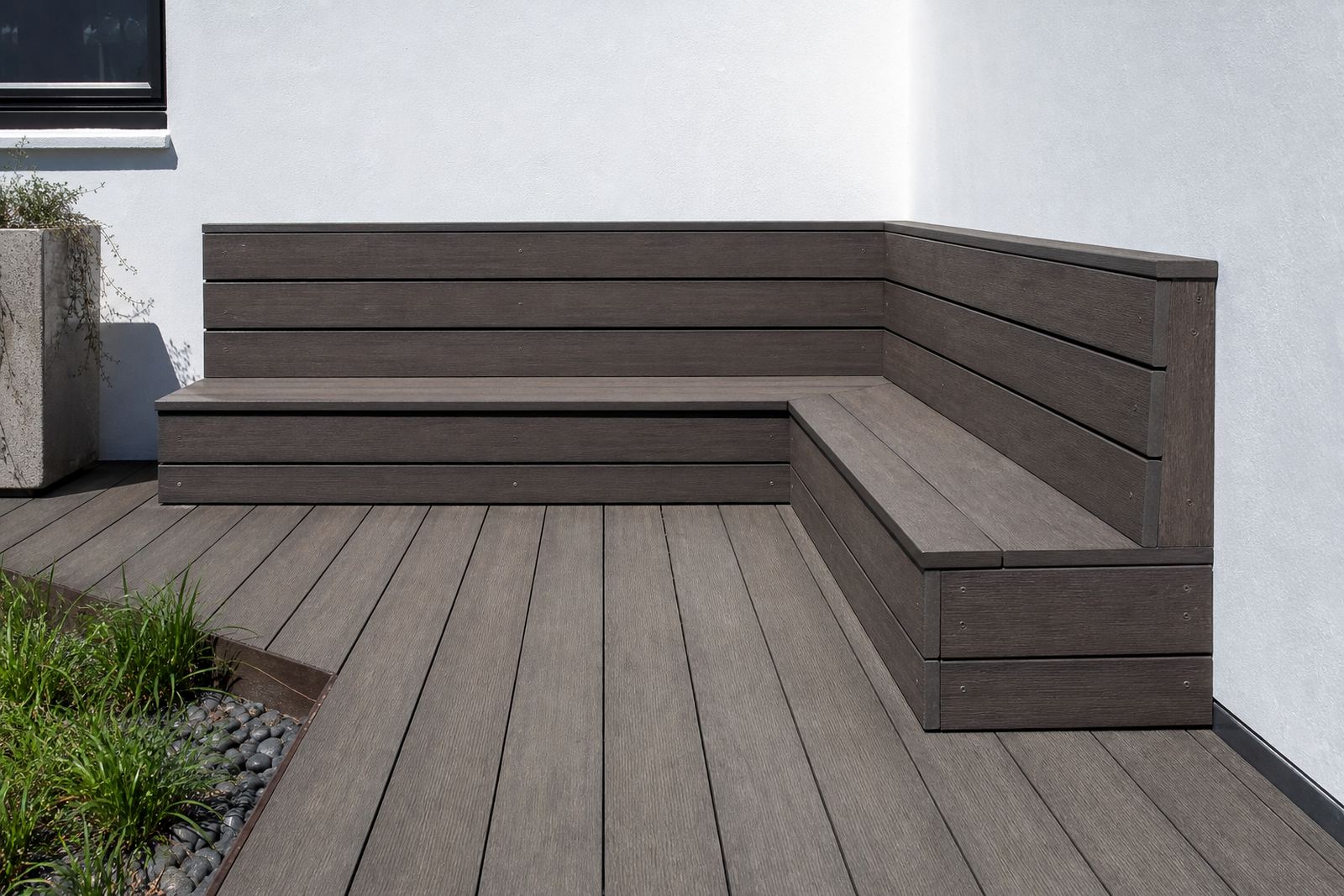
Corner benches are made for tight outside spaces that need proper seating without wasting room. They work well where two deck runs meet, around a braai area, against a boundary wall or beside a planter where a straight bench would leave dead space.
These units are usually built from recycled plastic lumber components that do not split like timber and do not need regular sealing. That makes them useful for homes, body corporates, schools, guesthouses and business courtyards where rain, sun and coastal air can wear down standard wooden seating. In places like Cape Town, Somerset West and Durban, that extra resistance matters.
Size Choices And Layout Options
Corner benches are usually planned as two joined seating runs that meet at a right angle, with the exact size set by the available floor space. Common layouts can be compact for small residential courtyards or wider for hospitality, schools and body corporate common areas. The final proportions depend on the corner angle, circulation space and whether the bench must fit under a pergola, beside a pool or along a deck perimeter.
Because every site is a bit different, site measures and layout planning are important before any cutting starts. A good fit keeps the bench comfortable and leaves enough room for people to move past it without feeling cramped.
- Can be made to suit standard right angle corners or adjusted for non standard site angles
- May include backrests, open seating or integrated arms depending on the layout
- Can be planned as a stand alone unit or tied into adjoining deck seating
Why Recycled Plastic Lumber Works Well Outdoors
Recycled plastic lumber is chosen for outdoor seating because it handles moisture and weather better than untreated timber. It does not absorb water in the same way, so it is less likely to swell, rot or attract the kind of maintenance cycle that many outdoor wooden installations need.
It also suits places where routine servicing is difficult. On coastal sites with salt in the air, or in inland areas where the sun is harsh and load-shedding affects working hours, owners often want seating that can simply be wiped down and kept in use. The material is practical, and it helps reduce the need for regular repainting or resealing. It is not a miracle material though, so correct fixing and sensible care still matter.
- Low maintenance compared with many timber seating options
- Suitable for humid, coastal and high sunlight environments
- Useful where long service intervals are preferred for busy properties
Installation, Fixing And On Site Requirements
Corner benches are normally installed on a prepared, level surface such as a deck, paving or a concrete slab. The fixing method depends on the design and the substrate. On timber decks the installer must check the frame, joist spacing and edge support before anchoring anything. On concrete or paving, proper anchoring points and level setting are key.
No gas or electrical supply is needed for the bench itself. That said, installation often works best when the site is measured properly and any nearby services are identified first, especially if the corner sits beside lighting, irrigation or concealed plumbing. If the area is part of a larger deck job, installation can be coordinated with edge finishing and any related component replacement.
- Requires a level, prepared base for proper support
- No power or gas connection required for the product itself
- Best installed after site measures and layout planning are confirmed
Care, Cleaning And Refurbishment Over Time
Routine care is straightforward. Dust, sand and general outdoor dirt can be washed off with water and a mild cleaning agent if needed. In coastal towns like George and Durban, regular rinsing helps remove salt build up. In urban settings such as Johannesburg or Bellville, dust and pollution can settle on the surface and should be cleaned off before it becomes stubborn.
Unlike timber, recycled plastic lumber does not usually need repainting or wood treatment. Even so, fittings, support points and adjoining deck parts should be checked from time to time. Loose fixings, worn connection points or movement in the base should be dealt with early to avoid bigger repairs later. Refurbishment and component replacement can extend the useful life of the bench without replacing the whole unit.
- Wash with water and a mild detergent when needed
- Check fixings, support points and adjoining deck parts regularly
- Refurbishment can include edge work, component replacement and seating adjustments
What To Confirm Before You Order
Before ordering a corner bench, it helps to confirm the corner dimensions, the intended use and how the bench will be accessed on site. A bench for a private patio may need different detailing from one meant for a shared outdoor dining area. The more detail that is clear upfront, the easier the quote and production planning become.
Also think about the finish you want, how the bench connects to nearby decking, and whether any matching seating or deck refurbishment is needed at the same time. If the site is in Paarl or Somerset West, for example, heat and sun exposure may shape the final layout. If it is near the coast in Cape Town, salt air and wind driven dirt are worth keeping in mind.
- Measure both sides of the corner and confirm the angle
- Check whether backrests, arms or open ends are needed
- Confirm delivery access, parking space and any lifting limitations
- Decide if the bench needs to match existing decking or other seating units
Key facts
| Product type | Corner bench unit for outdoor seating corners |
|---|---|
| Material | Recycled plastic lumber with matching support components |
| Typical use | Patios, deck edges, communal outdoor corners and shared seating areas |
| Installation surface | Prepared deck, paving or concrete slab |
| Maintenance | Low maintenance cleaning with periodic checking of fixings and supports |
| Service options | Site measures, layout planning, installation, refurbishment and component replacement |