What Jetty Boards Are and Why They Are Chosen
Jetty boards are deck boards made for outdoor access over or near water, where timber can swell, split, stain or need constant treatment. Recycled plastic lumber works well in these areas because it does not absorb water the way natural wood does, and it holds up better in damp, coastal and high-use settings. In Cape Town, Durban and other humid coastal towns, that matters a lot.
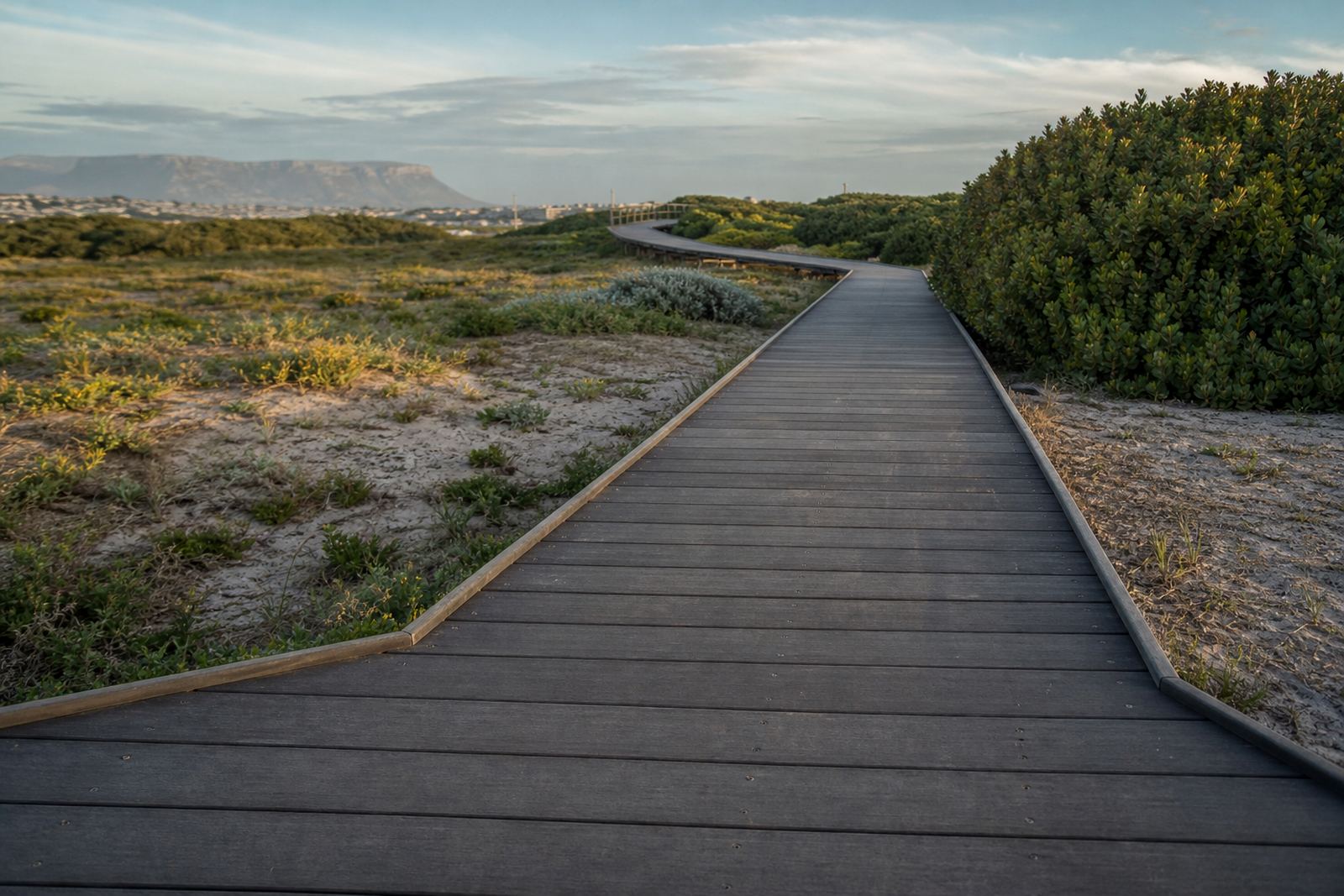
These boards are used for practical access routes rather than decorative deck-only spaces. You will see them on jetties, boardwalks, slipway edges, service walkways, estate paths and other areas where people need firm footing and simple upkeep. For municipalities, lodges, marinas, schools and commercial sites, the appeal is clear: fewer surface repairs and less ongoing maintenance.
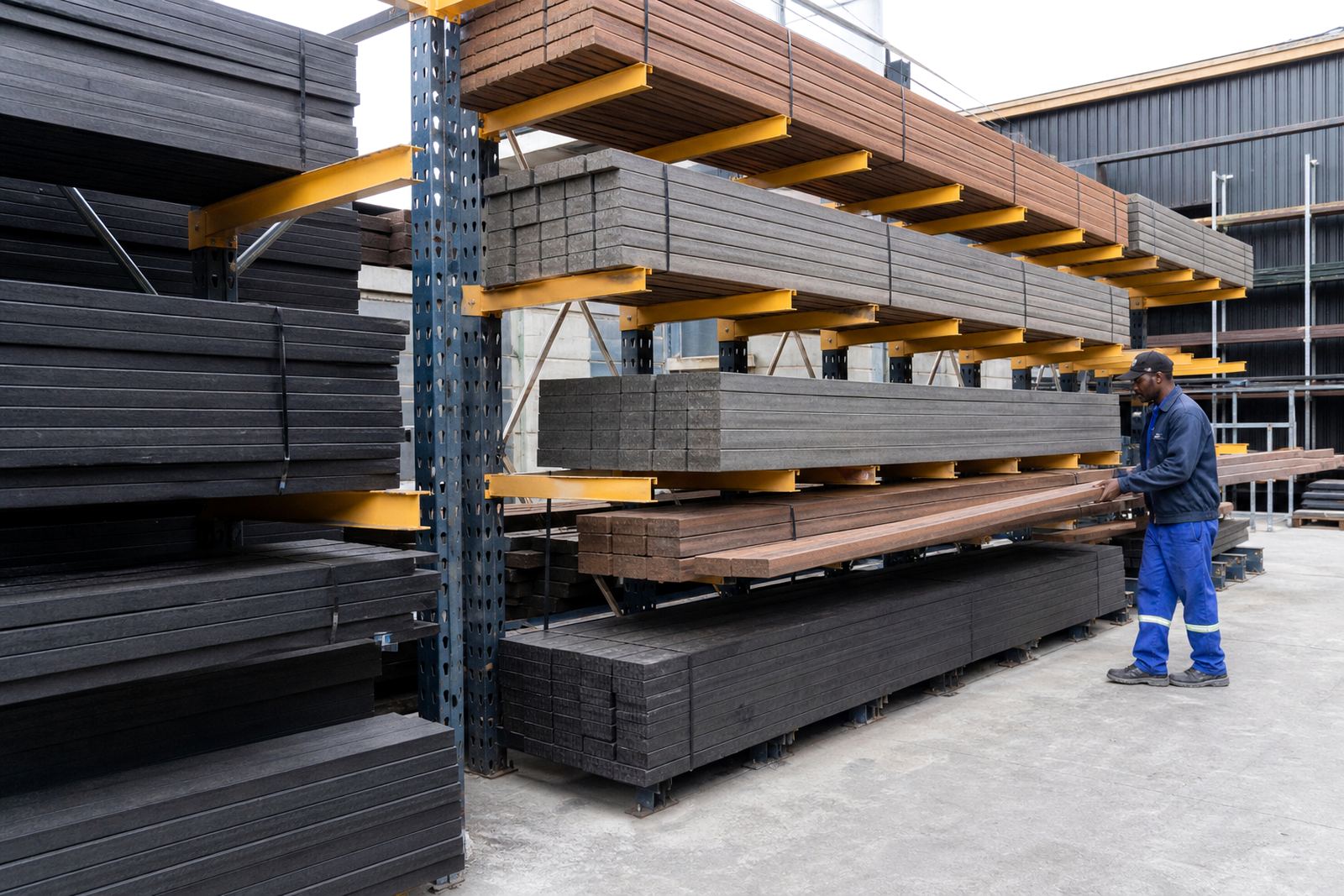
Plastimber supplies recycled plastic lumber decking and benches from Paarden Eiland, with delivery arranged across South Africa. The material is suited to everyday outdoor use, and it gives specifiers a sensible alternative to treated timber where long service life and lower upkeep are important.
Sizes, Profiles and Finish Options
Jetty boards are usually ordered to suit the span, subframe spacing and the way people will use the walkway. The most practical approach is to match the board profile to the site rather than force a standard board into a difficult layout. Straight boards, wider planks and heavier-duty sections can all be used depending on the design.
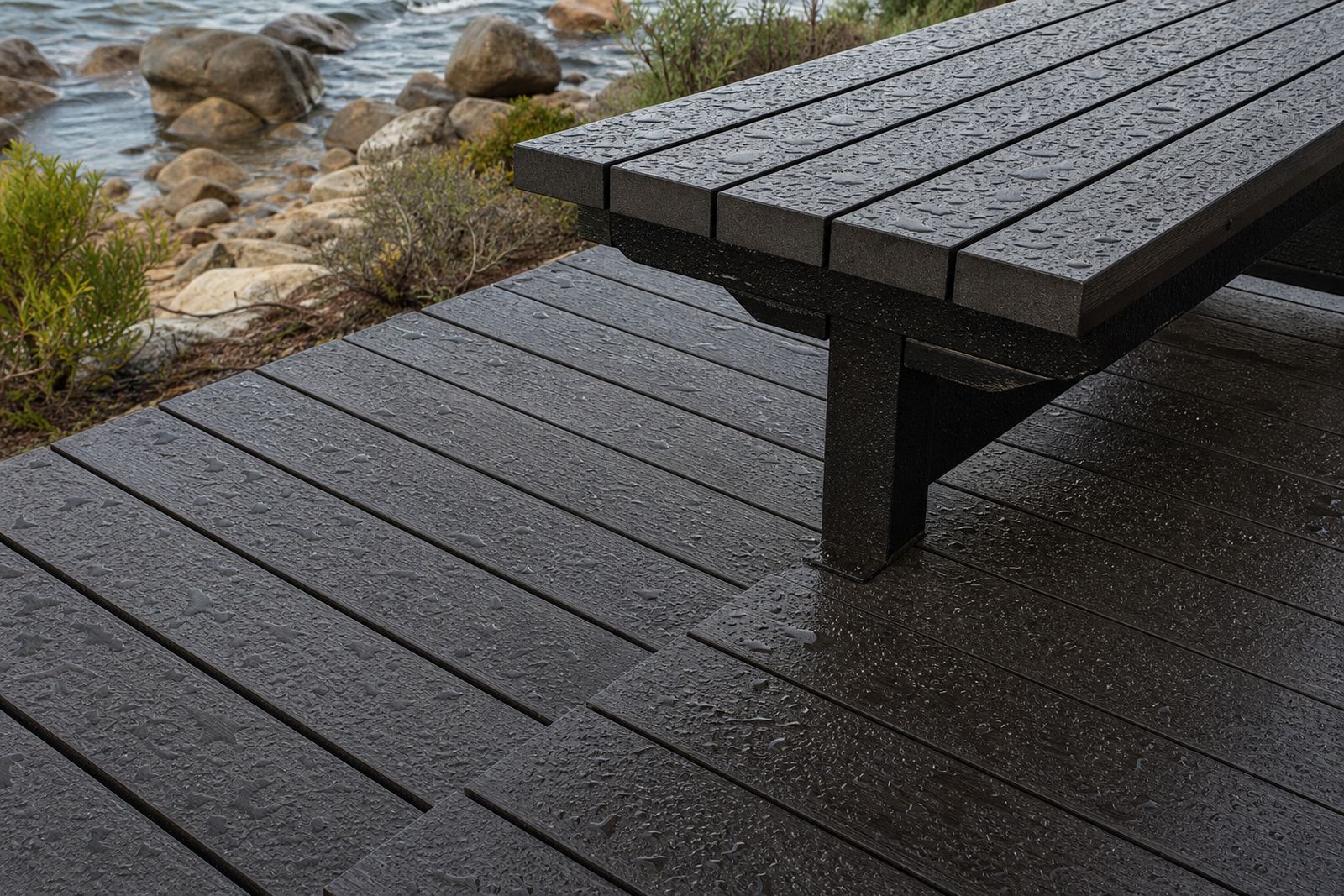
Common options include smooth-face boards for easy cleaning and textured surfaces for extra grip in wet areas. Edge profiles can be square, rebated or shaped to suit a cleaner finish along the sides of the walkway. For exposed waterside areas, dark and mid-tone colours are often selected because they hide everyday marking better than very light finishes.
- Board widths can be selected for narrow access paths or wider walkways
- Lengths can be cut to suit the site layout and fixing points
- Surface finish may be smooth or lightly textured, depending on foot traffic and cleaning needs
- Board thickness is matched to span, support spacing and expected use
- Matching edging pieces and trims can be supplied where required
When a site has bends, steps, landings or a turn around point, layout planning becomes important. A simple board size is not always the best answer. It is often better to plan the full route first, then confirm the board profile, fixing method and finish before materials are ordered.
Where Jetty Boards Suit Best
Jetty boards suit sites that need reliable access in damp or exposed conditions. They are often chosen for waterside walkways, marina access, canal-side paths, farm dams, fishing areas, resort platforms and public boardwalks. In places like George, Somerset West and Paarl, they are also useful where outdoor movement paths need to stay serviceable through winter weather and irrigation splash.
They also work well on commercial and municipal projects where the surface will be cleaned often or used by many people. Recycled plastic lumber is not affected by termites, does not rot in the same way as timber and handles moisture better than many traditional materials. That makes it a practical choice for Durban humidity, Cape coastal air and inland sites that get strong sun by day and cooler conditions at night.
- Waterside access routes and jetties
- Boardwalks at hospitality or leisure sites
- Estate paths near ponds, dams or pools
- Public viewing platforms and walk-through areas
- Service routes where simple upkeep is preferred
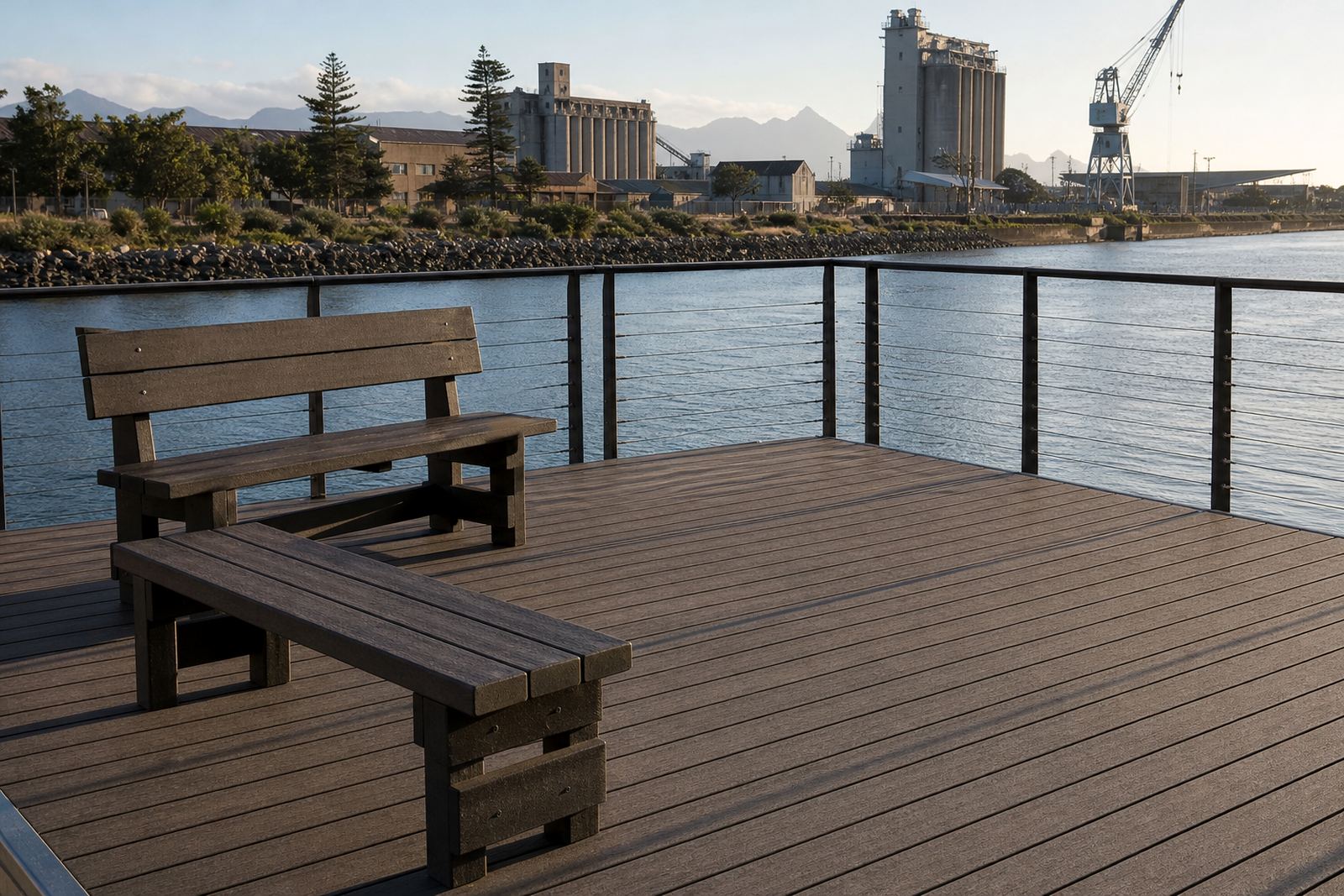
For some projects, the same material is also used with matching benches or seating platforms. That keeps the site looking consistent and can make later maintenance easier because the same general material is being used throughout.
Installation, Fixing and Power or Gas Needs
Jetty boards are installed over a prepared subframe, and the fixing method should be chosen for the site conditions. In waterside settings, the support structure must be aligned carefully so boards sit flat and drainage is not blocked. Allow for movement, edge clearance and the way water will run off the surface after rain or wash-down.
Most installations use standard carpentry tools and site fixing hardware suited to the substrate. On some projects, cutting and drilling are done on site, while on others the material is pre-cut for easier installation. There is usually no special gas requirement, and no complex power setup is needed beyond normal installation tools. For remote sites or load-shedding periods, plan for practical site access and enough power for cutting, drilling and fastening equipment.
Where a walkway is close to salt water, fixing details matter. The support frame, fasteners and board spacing should all be checked before work starts. If the installation is on a municipal or public site, confirm any local access rules, noise limits and working-hour restrictions before delivery or fitting begins.
- Confirm subframe spacing before ordering boards
- Check whether the site needs handrail positions or edge restraint
- Plan for drainage and easy cleaning access
- Use the correct fastening method for wet or coastal conditions
- Allow for future inspection points and replacement access
Care, Cleaning and Long-Term Servicing
One reason these boards are chosen is that they need far less regular treatment than timber. There is no oiling, sealing or seasonal repainting in the usual sense. Basic cleaning with water and a suitable non-abrasive cleaner is normally enough for most sites. In coastal towns, washing off salt build-up from time to time helps keep the surface looking tidy and reduces surface grime.
For commercial use, it is sensible to set a simple maintenance routine. Check the boards for loose fixings, worn edges, debris build-up and movement at joins. Where benches or edging are installed from the same material, the same checks apply. If a section is damaged, component replacement can often be arranged without disturbing the full route.
Refurbishment may be needed after years of heavy use, especially where vehicles, trolleys or repeated foot traffic create wear at the same points. In those cases, practical servicing can include edge finishing, board replacement and fixing checks. The aim is to keep the structure safe and neat without unnecessary full replacement.
What to Check When Ordering for Your Site
Before ordering jetty boards, it helps to confirm exactly how the area will be used. A private garden path and a public waterfront walkway do not ask the same thing from a board system. The right order starts with measurements, then moves to the span, fixing method and finish needed for the site.
- Measure the full walkway length, width and any turns or steps
- Confirm whether the site is coastal, inland or fully exposed to weather
- Check the subframe material and spacing before board sizes are chosen
- Decide if a smooth or textured surface is more suitable
- Work out whether handrails, edging or drainage gaps are needed
- Ask about delivery timing if the site has access restrictions or municipal rules
It is also worth confirming the colour and finish against the surrounding area, especially on visible commercial sites in Stellenbosch, Bellville or Johannesburg where the walkway may sit next to other finished structures. If you are fitting benches as part of the same project, order them together so the site has one consistent look and the delivery can be coordinated in a single run.
Clients can reach Plastimber through the enquiry form on the contact page, and the team can help with site measures, layout planning, material quoting, delivery coordination, deck installation, bench installation and trade support. From Paarden Eiland to projects in Cape Town, George, Durban and beyond, the focus stays on practical material supply and proper site fit.
Key facts
| Product type | Recycled plastic lumber jetty boards for outdoor access and waterside use |
|---|---|
| Common use | Jetty walkways, boardwalks, platforms, access paths and service routes |
| Material | Recycled plastic lumber |
| Finish options | Smooth or textured surface, with matching edging where required |
| Typical sizing | Lengths, widths and thicknesses selected to suit the site and support spacing |
| Service areas | Cape Town, Stellenbosch, George, Johannesburg, Durban, Paarl, Somerset West and Bellville |