
Start With A Simple Cleaning Routine
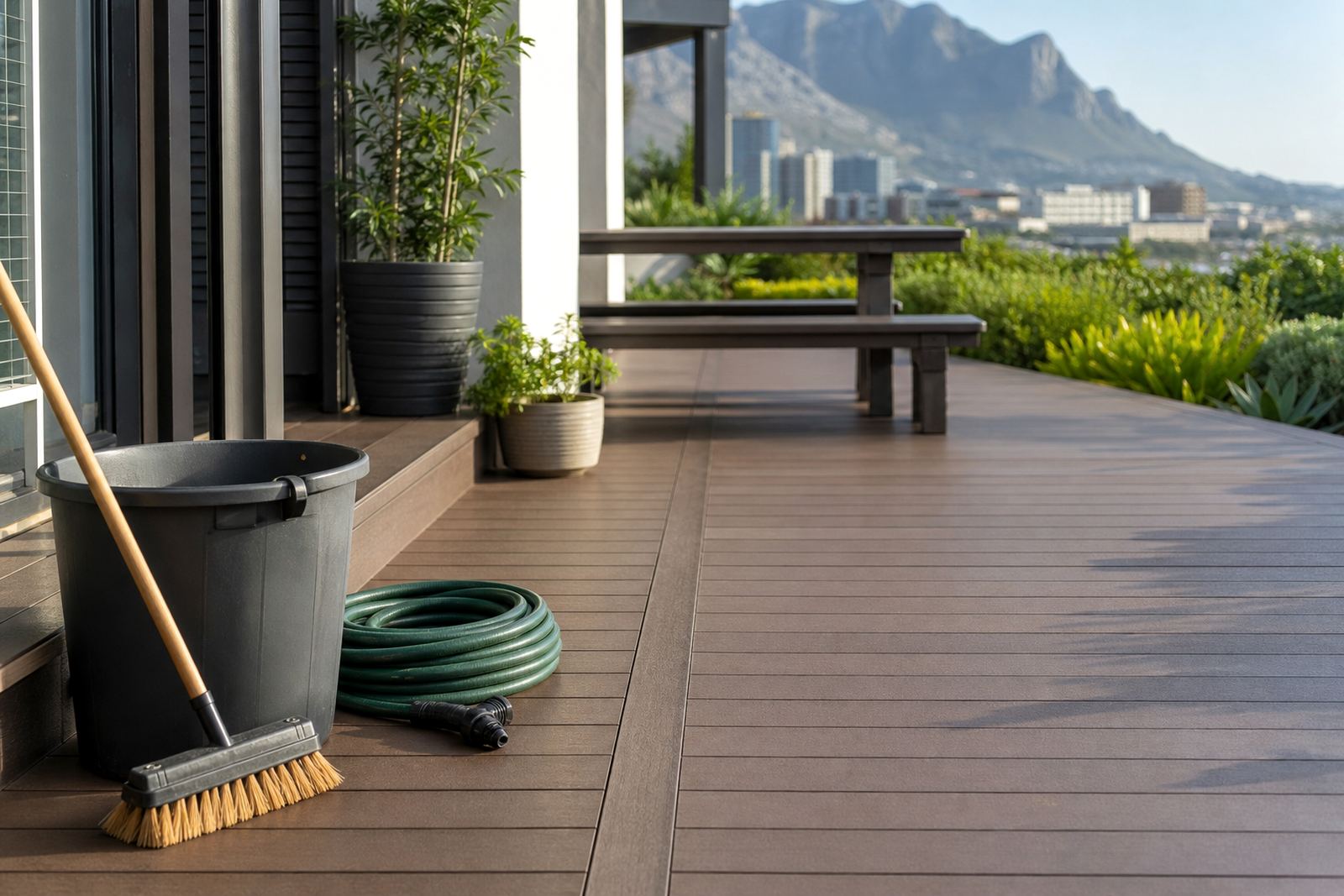
For day to day care, keep it simple. Sweep off sand, leaves, food scraps and loose grit before they grind into the surface. In places like Paarden Eiland, Somerset West and George, windblown dust can build up quickly, and a quick sweep makes the rest of the job easier.
For light cleaning, use warm water and a mild household detergent with a soft broom or mop. Rinse well afterwards so soap residue does not dry into a dull film. In coastal areas such as Cape Town, Stellenbosch and Durban, a rinse now and then also helps remove salt deposits from sea air.
What To Use And What To Avoid
Recycled plastic lumber is low maintenance, but the wrong tools can still mark the surface or leave it looking patchy. Use soft bristles, a microfiber cloth, and non abrasive cleaning products. If you are cleaning benches and decking together, work from the top down so dirty water does not run over areas you have already washed.
- Use warm water and mild soap for routine washing
- Use a soft brush for textured areas and corners
- Rinse with clean water after washing
- Dry with airflow or a clean cloth if you want to reduce water marks
- Avoid metal scourers, strong solvents and harsh bleach mixes
Where municipal water restrictions are in place, use a bucket and cloth rather than a free running hose. That keeps water use under control and it is easier to manage on smaller sites too.
Dealing With Stains Before They Set In
Most marks are easier to remove when you deal with them early. Food spills, dust from building work, garden soil and bird droppings should be cleaned as soon as practical. If left for days, they can be harder to lift, especially on busy commercial walkways or seating areas.
For sticky residue, soften the area with warm soapy water and leave it for a few minutes, then wipe with a soft cloth. If there is a stubborn patch, repeat the process rather than scrubbing hard. A bit of patience usually works better than pressure, and it helps keep the surface looking even.
- Clean spills quickly, especially oils, sauces and paint splashes
- Test any stronger cleaner on a small hidden area first
- Rinse thoroughly after stain removal
- Do not scrape with blades or sharp tools
Seasonal Care For Coastal And Inland Conditions
South African weather changes the cleaning routine more than many people expect. In humid coastal towns like Durban and Somerset West, salt, moisture and mould on nearby surfaces can make benches and decks look tired sooner. A regular wash and a check for trapped dirt in corners helps keep things tidy.
In hotter inland areas such as Johannesburg and Paarl, dust and sun exposure are more of a concern. Heat can make dirt bake onto the surface, so a cooler morning or late afternoon clean is usually best. If you notice standing water after rain, make sure drainage paths are open and clear so dirt does not collect in the same spots again.
For properties with trees overhead, pay extra attention to leaf tannins and sap. These marks are common and usually come off with repeated washing, but the sooner you deal with them the less effort is needed.
How To Keep Benches Looking Neat In High Use Areas
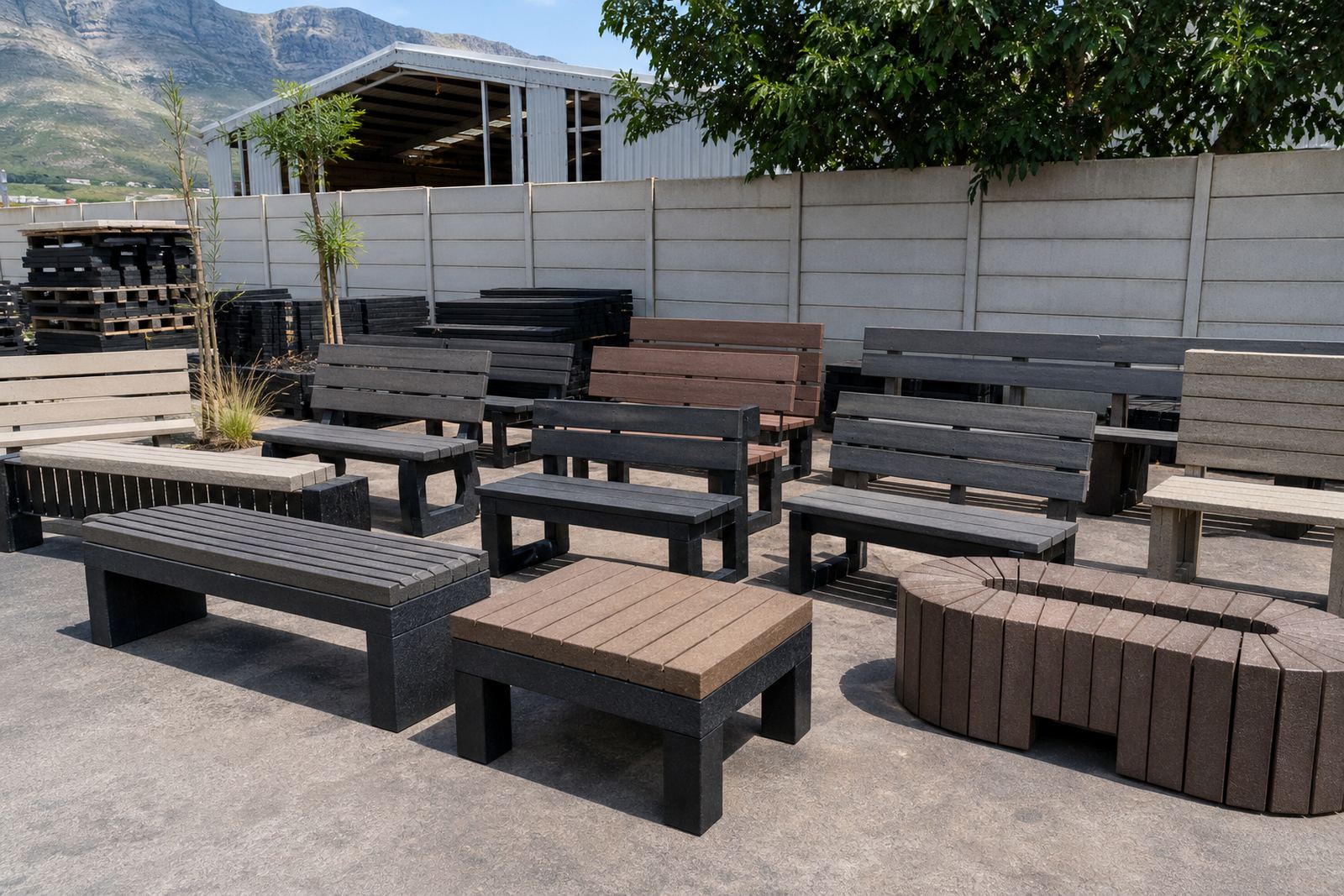
Benches in schools, waiting areas, patios and outdoor public spaces need a bit more attention because they pick up marks from bags, shoes and regular traffic. Wipe arm rests, seat tops and edges more often than the rest of the frame, since those areas show wear first.
If the bench has been used for planting pots, food service or trade work, check for grime under the seat and around fixings. A small brush can clear corners where dust settles. It is also worth checking that nearby paving is not leaving mud splashes after rain, because that is often where the next cleaning job starts.
- Inspect seating areas weekly in busy spaces
- Wipe down contact points with a mild cleaner
- Check for grime around fixings, supports and feet
- Clear nearby paving or drains so dirt does not return straight away
A Simple Inspection Checklist After Cleaning
Once the surface is clean, take a minute to look over the installation. This is the best time to spot loose fixings, blocked drainage, damaged edge sections or areas that need touch up work. Regular checks also help you plan refurbishment before small issues become bigger ones.
- Look for scratches, scuffs and surface marks
- Check that water is not pooling on the deck
- Confirm fixings and supports are still secure
- Inspect bench legs, ends and corners for wear
- Arrange component replacement if any part is damaged or missing
A short inspection after cleaning is often enough to catch problems early. On larger sites in Cape Town, George or Johannesburg, it can save time by showing which areas need more attention and which are fine with routine care.
When To Ask For Refurbishment Or Trade Support
If the surface has deep staining, heavy wear or visible damage, cleaning alone may not be enough. Deck refurbishment, bench refurbishment and component replacement can restore a site without starting from scratch. That is often the better choice for commercial properties, body corporates and public spaces where downtime needs to stay low.
For planned maintenance, it helps to schedule a proper inspection before the busy season or after long periods of harsh weather. Our team in Paarden Eiland supports projects across Cape Town, Stellenbosch, George, Johannesburg, Durban, Paarl, Somerset West and Bellville with site measures, layout planning, delivery coordination, installation and care advice. If you need help deciding what is worth keeping and what should be replaced, get in touch through the enquiry form on our contact page.