Start with the site conditions, not just the look
Before you choose a finish, think about where the boards will live. A shaded courtyard in Stellenbosch, a salty balcony in Sea Point, or a busy public seating area in Durban all ask for different surface behaviour. Recycled plastic lumber handles moisture well, but the finish still affects grip, cleaning and how dirt shows up over time.
For exposed coastal work, many buyers prefer a surface that hides day to day marks and helps with foot traction when mornings are damp. In inland areas, a smoother face can work well where the deck is mainly for entertaining and regular sweeping is part of the routine. The right choice is usually the one that suits the use pattern, not the one that looks nicest in a sample off-cut.
How textured boards behave in real use
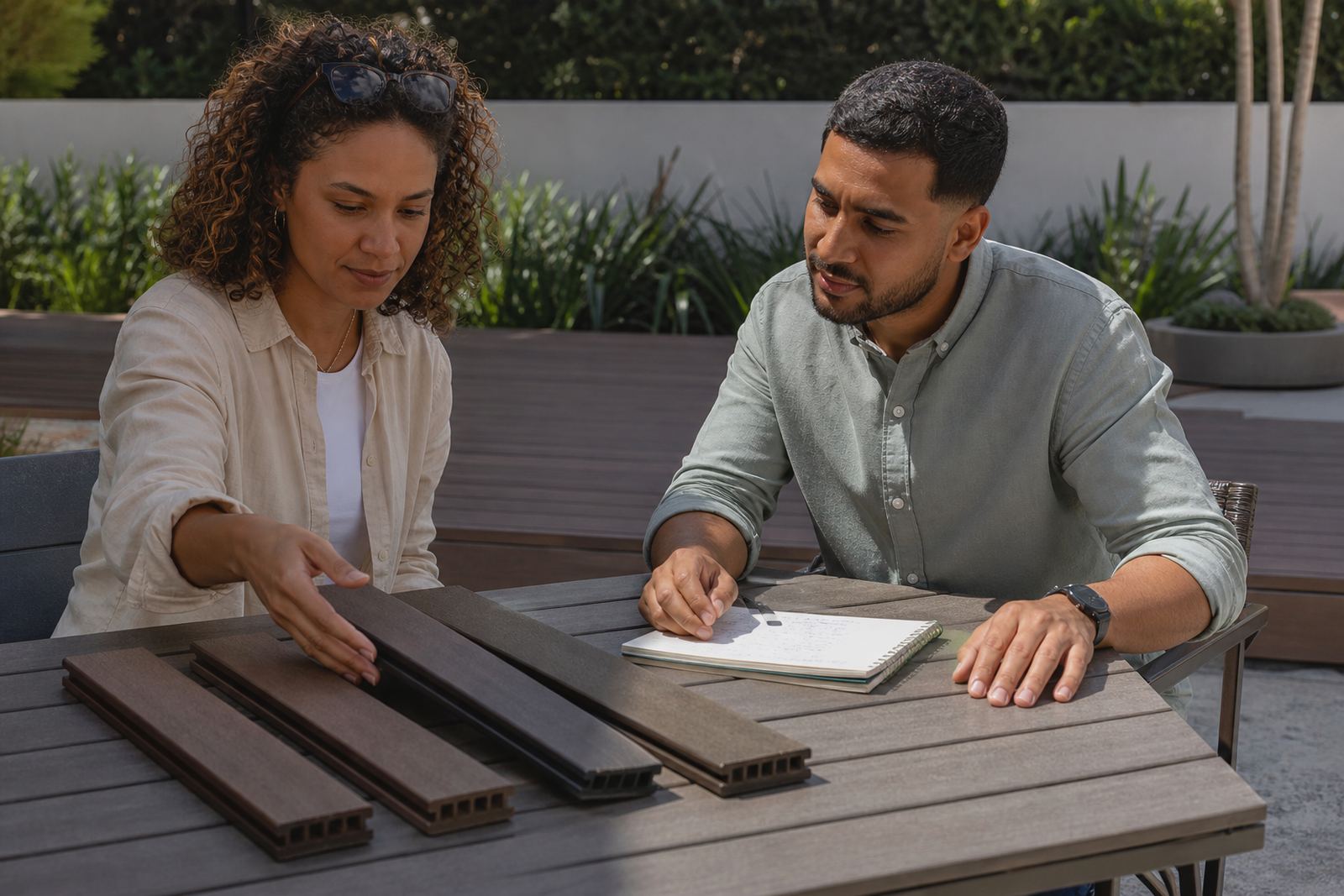
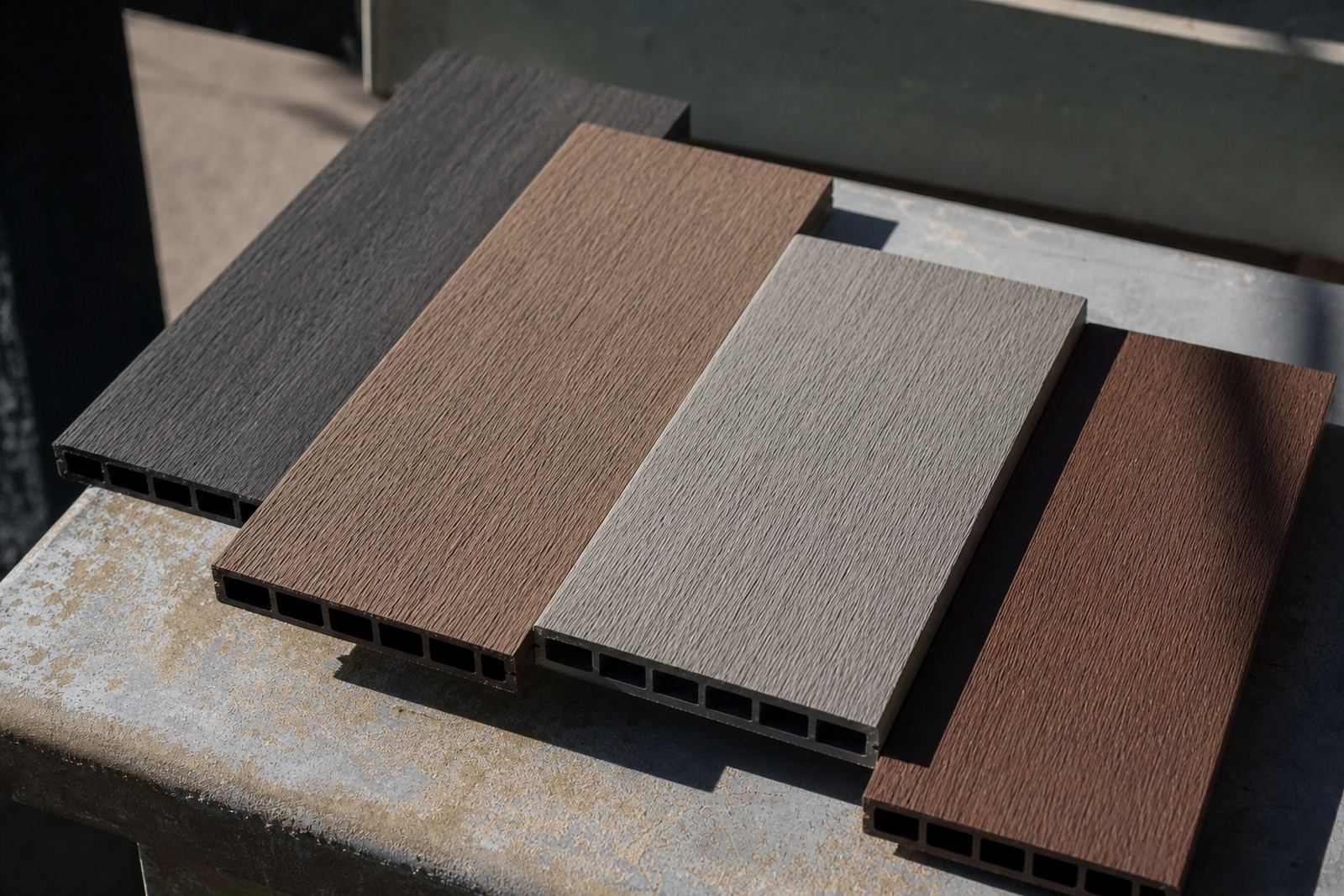
Textured boards have a patterned face that gives the surface more bite underfoot. That can be useful for pool surrounds, ramps, steps, braai areas and public walkways where people may be barefoot or moving in and out with wet shoes. The pattern also softens the look of the boards, which can help on larger decks where a little visual texture makes the space feel less flat.
There is a practical side too. Light scuffs and everyday marks tend to blend in better on a textured face than on a smooth one. That said, more texture can hold a bit more grit, so it is worth planning for regular sweeping in windy areas or near gardens. A quick wash is usually enough, but the finish needs slightly more attention if leaves, dust or sand build up.
- Good for wet zones and barefoot traffic
- Helps disguise light wear and surface marks
- Can trap fine dirt if cleaning is neglected
- Often suits pools, steps and busy shared areas
Where smooth boards make better sense
Smooth boards give a cleaner, more formal appearance and are often chosen where the deck forms part of an indoor-outdoor transition. Think patios, restaurant spill-out areas, reception terraces or private entertainment spaces where the finish should look neat and simple. The smoother face also makes it easier to wipe down after food spills, dust, or mud brought in after rain.
Some clients prefer smooth boards because they show the board profile clearly and create a more even visual line. If the project has built-in benches or feature panels, the plain face can keep the layout looking calm and ordered. On the other hand, smooth boards may show more scuffing in high traffic spots, so it is worth checking whether the project will carry shoes, furniture movement or frequent cleaning equipment. A bit of planning here saves a lot of grumbling later on.
- Best for formal or modern-looking settings
- Easy to wipe clean after spills
- Shows marks more readily than textured boards
- Useful where a plain, even finish is preferred
Choose by location: Cape Town, Durban, Johannesburg and beyond
Different parts of South Africa push finishes in different ways. Along the Cape coast, moisture, wind-borne sand and salt can make a textured finish more forgiving on outdoor decks and seating. In Durban, humidity and frequent rain mean good drainage and simple cleaning matter just as much as the appearance. In Johannesburg, where many projects are more sheltered, smooth boards often work nicely for courtyards and rooftop spaces, provided the layout allows for proper maintenance.
For towns such as George, Paarl, Somerset West and Bellville, the choice often comes down to the mix of sun, dust and everyday use. A family deck that gets used for entertaining on weekends may suit smooth boards. A communal area, school benching or trade project with lots of foot traffic may benefit from texture. The site itself should decide, not a one-size-fits-all idea.
- Coastal sites: consider grip and easy rinsing
- Inland sites: think about dust, heat and traffic
- Shared spaces: durability of appearance matters
- Entertainment areas: match finish to the setting
A simple decision checklist before you order
When a customer calls through with an enquiry form, the easiest way to narrow the finish is to walk through the use case step by step. What will people wear on the surface, how often will it be cleaned, and is the area likely to stay wet for long periods? Those answers usually point clearly toward textured or smooth boards.
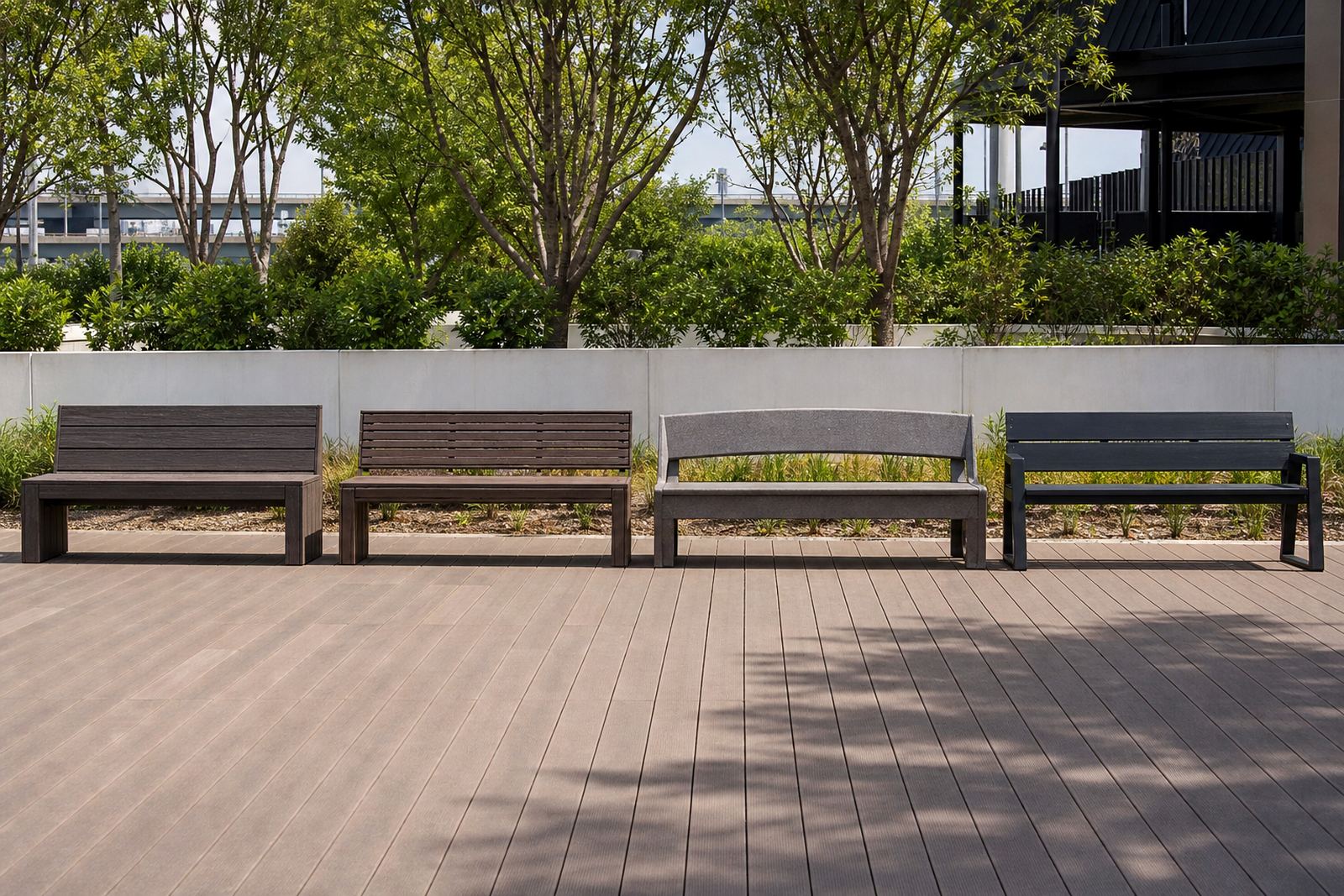
It also helps to look at the rest of the project. A bench with a smooth seat and textured backrest can work well, but only if the layout and edge finishing are planned properly. For trade clients, the right finish can reduce maintenance calls later and make handover simpler. Measure the site, check the traffic pattern, and ask how the area will be used at 7am on a wet Monday, not just on a sunny Saturday.
- Will the surface be walked on barefoot or with shoes?
- Does the area get wet, dusty or sandy?
- Is the finish for a home, school, body corporate or commercial site?
- Will cleaning need to be quick and simple?
- Will the board be seen up close or from a distance?
Planning support from our Paarden Eiland team
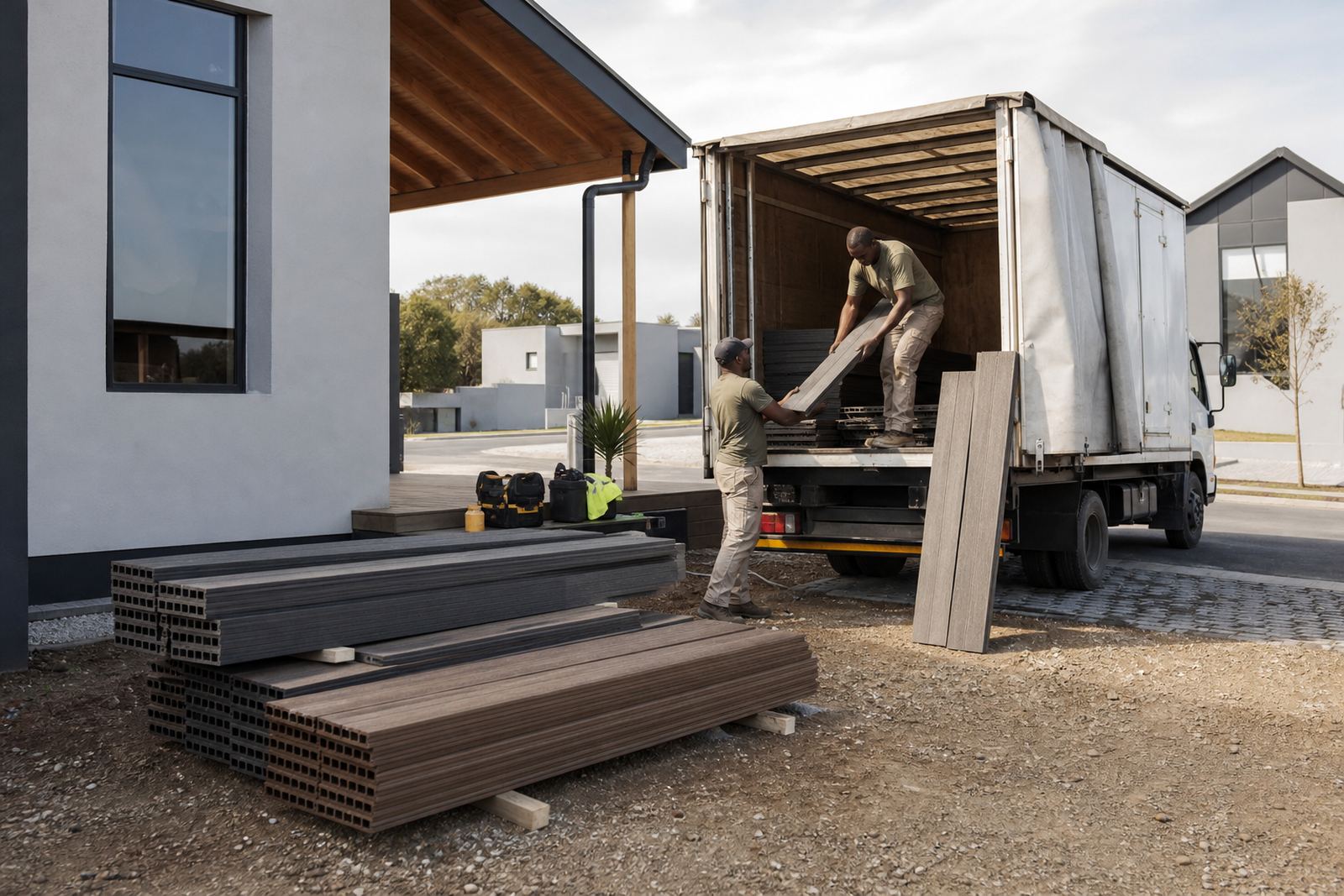
Plastimber works from Paarden Eiland in Cape Town and supplies recycled plastic lumber decking and benches across South Africa, including Cape Town, Stellenbosch, George, Johannesburg and Durban. Our team can help with site measures, layout planning, material quoting, delivery coordination, deck installation, bench installation, edge finishing, refurbishment, component replacement, care advice and trade support. That makes it easier to match the finish to the job before anything is cut or fixed in place.
MD Morne van Zyl leads the business with a practical approach, and the team includes Anele Mkhize in sales, Bianca Fourie on projects, Thabo Molefe in production, Leanne Naidoo in customer support, Jason Petersen on installation and Sibusiso Dlamini on logistics. For a new deck or a refurbishment, the finish choice should sit alongside the fixing method, substructure and drainage plan. Get that right and the boards will look better for longer with less faffing about.