
Confirm the Delivery Point and Site Contact
Start by making sure everyone knows where the load is going. If the site has more than one entrance, give clear directions for the correct gate, guardhouse or loading point. In places like Cape Town, Stellenbosch, George, Johannesburg and Durban, a small access error can cost time and create avoidable hold ups, especially where trucks need to work around traffic, municipal restrictions or tight industrial yards.
Nominate one person on site to receive the delivery. That person should know the order, the storage area and who is allowed to sign off. If your project is in a residential area, body corporate site or commercial premises, check gate procedures in advance so the truck is not left waiting at the kerb.
- Share the full site address and nearest landmark
- Confirm the correct entrance and receiving point
- Nominate one contact person for the day
- Let security know the delivery date and vehicle details
Clear the Offloading Area Before the Truck Arrives
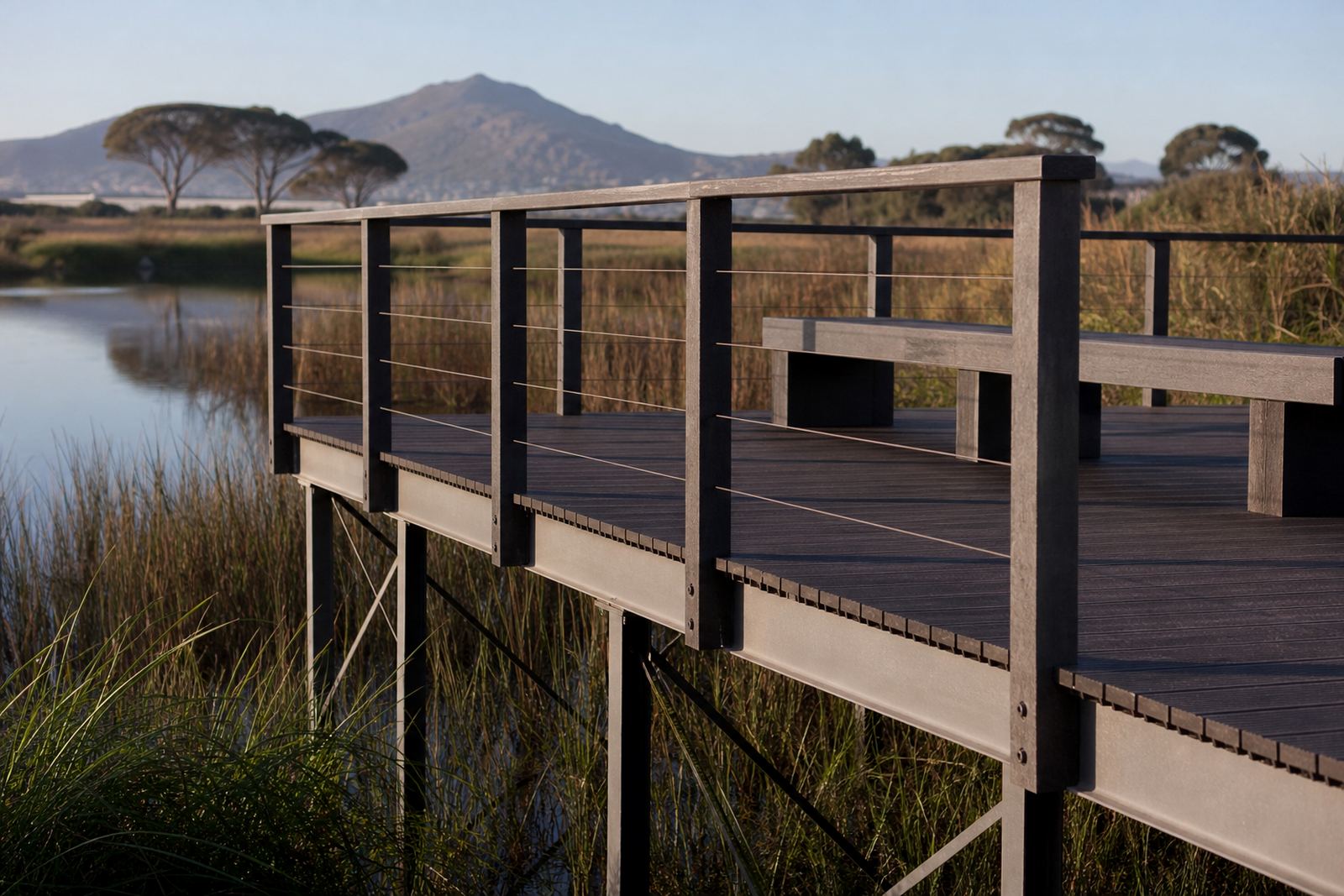
Recycled plastic lumber decking and benches are easier to handle when the offloading zone is open, level and free of clutter. Move loose materials, rubble, tools, cable reels and parked vehicles out of the way. If the ground is soft after rain, or dusty and uneven after a dry spell, choose the firmest area available so bundles can be set down safely.
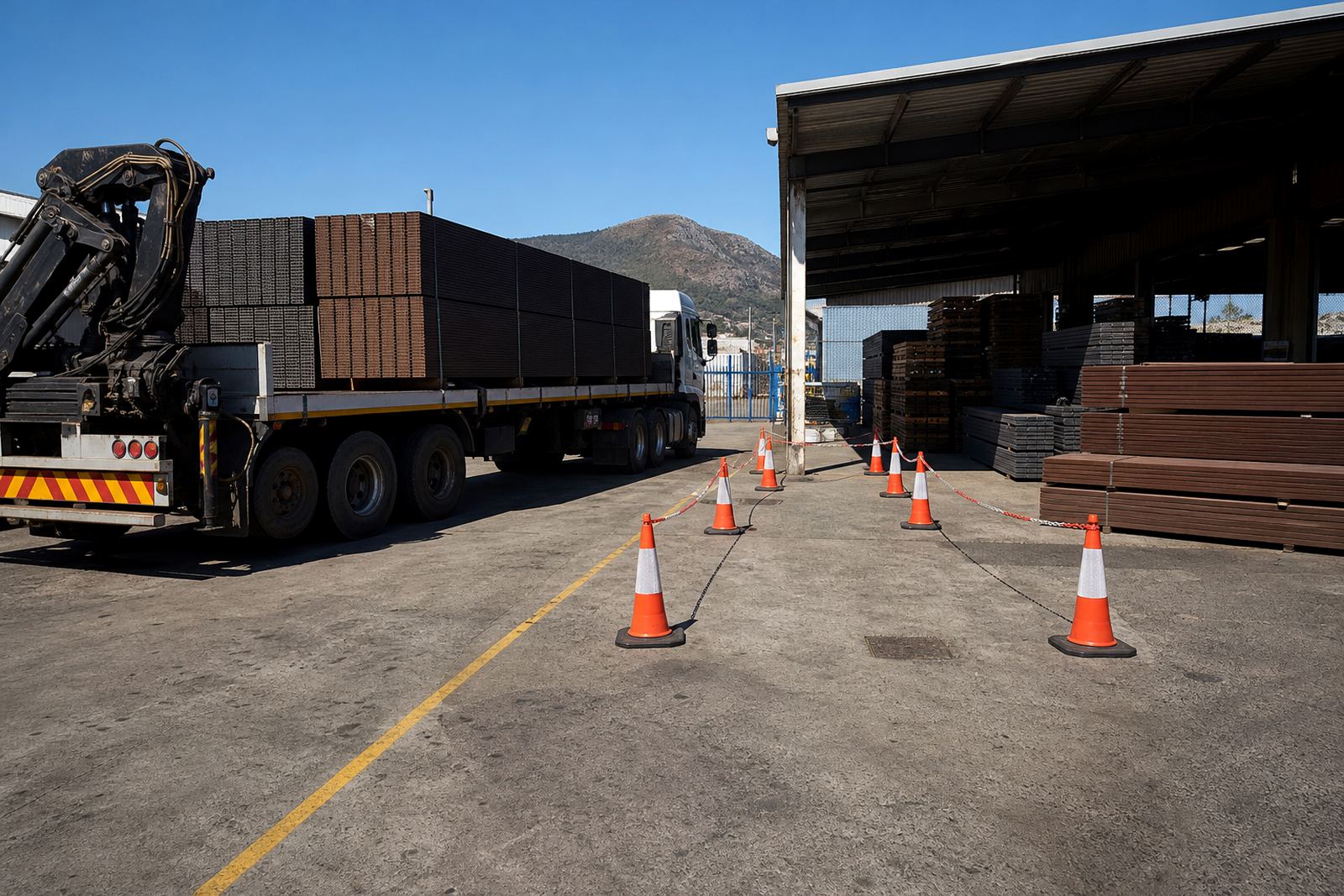
For larger commercial sites, mark the offloading space with cones, paint or barrier tape. On coastal sites such as Somerset West, Bellville or the Cape Town foreshore, wind can make loose packaging and light items shift quickly, so keep the area tidy before the truck doors open.
- Remove loose offcuts, rubble and packaging
- Make space for the vehicle to reverse or turn
- Keep pets, visitors and unnecessary staff away
- Check the ground is firm enough for offloading
Measure Access for Long Sections and Bench Units
Before delivery day, measure the narrowest part of the route from the gate to the storage point. Include driveway widths, sharp corners, low roof lines, stairways and any overhead obstacles such as shade cloth, awnings or low tree branches. Recycled plastic lumber can come in long lengths, so the route needs to suit the size of the pieces and the handling method planned for site.
If your site is in a townhouse complex or a business park, check whether lifts, ramps or internal passages are suitable for moving components without damage. A quick measurement can prevent damage to walls, gates and finished paving.
- Measure gate width and turning spaces
- Check for low branches, beams or cables
- Inspect ramps, slopes and uneven paving
- Confirm where long pieces will be stored after offloading
Plan for Weather, Load-Shedding and Coastal Conditions
South African sites change quickly with weather and power cuts, so plan for both. If rain is likely, prepare a dry place for stacking and covering materials after offloading. On windy days, make sure the loading area is protected from loose dust, plastic wrap and flying debris. In coastal towns, humidity and salt air can affect stored materials, site hardware and packaging, so keep everything off wet ground and under cover where possible.
If your project depends on powered tools, lighting or access control, think about load-shedding windows as well. It helps to have battery lights, a clear handover process and an alternative plan if the site goes dark before the truck leaves. That small bit of prep saves a lot of trouble later on.
- Check the weather forecast the day before
- Have tarps or cover sheets ready for wet conditions
- Keep materials off damp ground and standing water
- Plan around load-shedding if the site needs lighting or powered access
Prepare a Safe Offloading Method
Safety comes first when the truck is on site. Make sure there is enough room for manual handling or mechanical offloading if a forklift, pallet jack or similar equipment is being used. The route from vehicle to storage area should be stable and clear, with no stray tools, sharp offcuts or slippery patches underfoot.
Brief everyone on site before the vehicle arrives. Tell them where to stand, which areas are out of bounds and who will guide the driver. A calm, organised site makes the job faster and reduces the risk of damage to the decking or benches during offloading.
- Keep children, visitors and unrelated workers away
- Wear gloves and proper footwear where handling is needed
- Use clear signals between the driver and site team
- Keep a clean path between the truck and storage point
Store the Materials Correctly After Delivery
Once the delivery is on site, stack the materials in a dry, level position with enough support to prevent bending or rolling. If the project will not start immediately, keep the load covered and raised off the ground on timber bearers or similar supports. This matters on busy sites in Paarl, George and Durban where rain, dust and foot traffic can all affect the condition of stored product.
Keep components grouped by type so the installation team can find what they need quickly. Separate long sections, bench parts and fixings if they are delivered together. Good storage keeps the site tidy and makes the next stage easier.
- Store on level ground with support points underneath
- Cover against sun, rain and site dust
- Keep fixings and smaller parts in a safe labelled area
- Do not stack against walls where they can shift or mark finishes
Delivery Day Checklist for Site Teams
A simple checklist helps keep the day organised. If you are managing a home improvement project, a retail fit-out or a commercial refurbishment, run through the basics before the truck arrives. That way the driver is not waiting while people look for keys, clear gates or move parked vehicles.
Use this final check the morning of delivery, then keep one person available until the load is signed off and stacked where it should be.
- Site access is open and guarded if needed
- Receiving contact is on site
- Offloading area is clear and level
- Storage space is ready and dry
- Tools, gloves and safety gear are available
- Any site rules or municipal access limits have been checked