
Start with the pool edge and the daily use pattern
Before any material is ordered, look at how the pool area is used from morning through to evening. A family pool in Stellenbosch may need wide paths for moving chairs and towels, while a guesthouse in George might need clear circulation around the deep end, steps and seating zones. Measure the tightest points first, then note where wet feet will enter and leave the pool area.
Recycled plastic lumber decking is often chosen because it handles regular splash, cleaning and coastal air better than many timber options. It does not need the same level of sealing or repainting, which matters where load-shedding interrupts maintenance routines and where a pool area gets used every day in summer.
- Measure the full pool perimeter and any changing or braai areas.
- Mark gates, drains, pump rooms and access panels.
- Check where sun, shade and reflected heat will affect bare feet.
- Keep service access clear for filters, pipes and pool equipment.
Plan for drainage, slip safety and movement
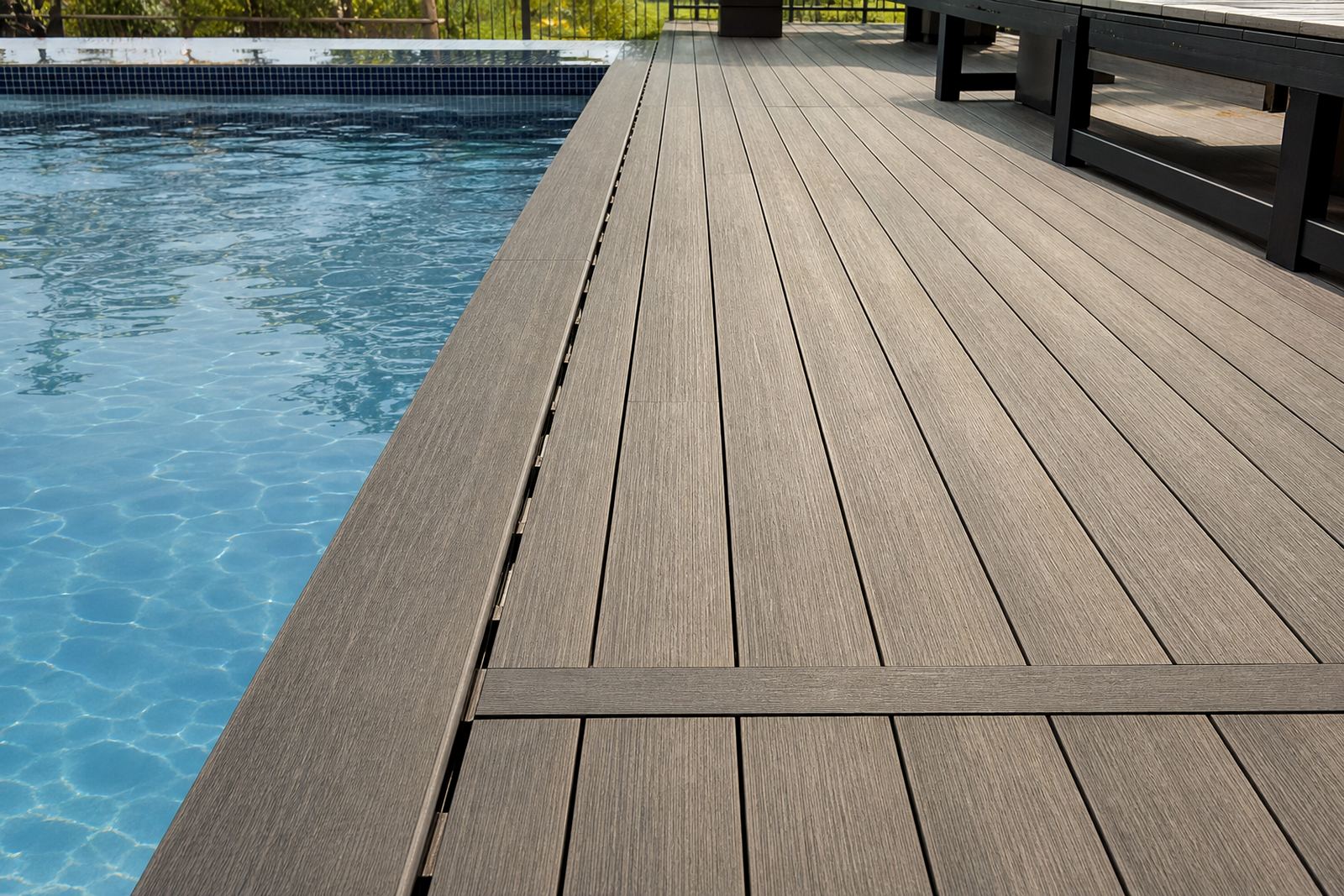
Pool decking needs to drain quickly and stay comfortable to walk on. Around South African pools, good planning means allowing water to move away from the deck surface and not into the house wall, boundary wall or plant room. On sloped sites in Paarl or Somerset West, this is especially important because water can gather fast after a splash or summer storm.
The layout should leave enough space for chairs, loungers and a person carrying a tray. If the deck wraps around a pool, keep the walkway even and avoid awkward step changes. At the same time the finish should support safe movement when the surface is damp. A clean edge and tidy board spacing help with both appearance and upkeep.
- Allow gentle falls for runoff, not standing water.
- Keep the deck clear of loose hoses and trailing cords.
- Use access points that do not interrupt the main walking line.
- Check municipal rules if the deck alters boundary lines, setbacks or fixed structures.
Choose the right recycled plastic lumber details
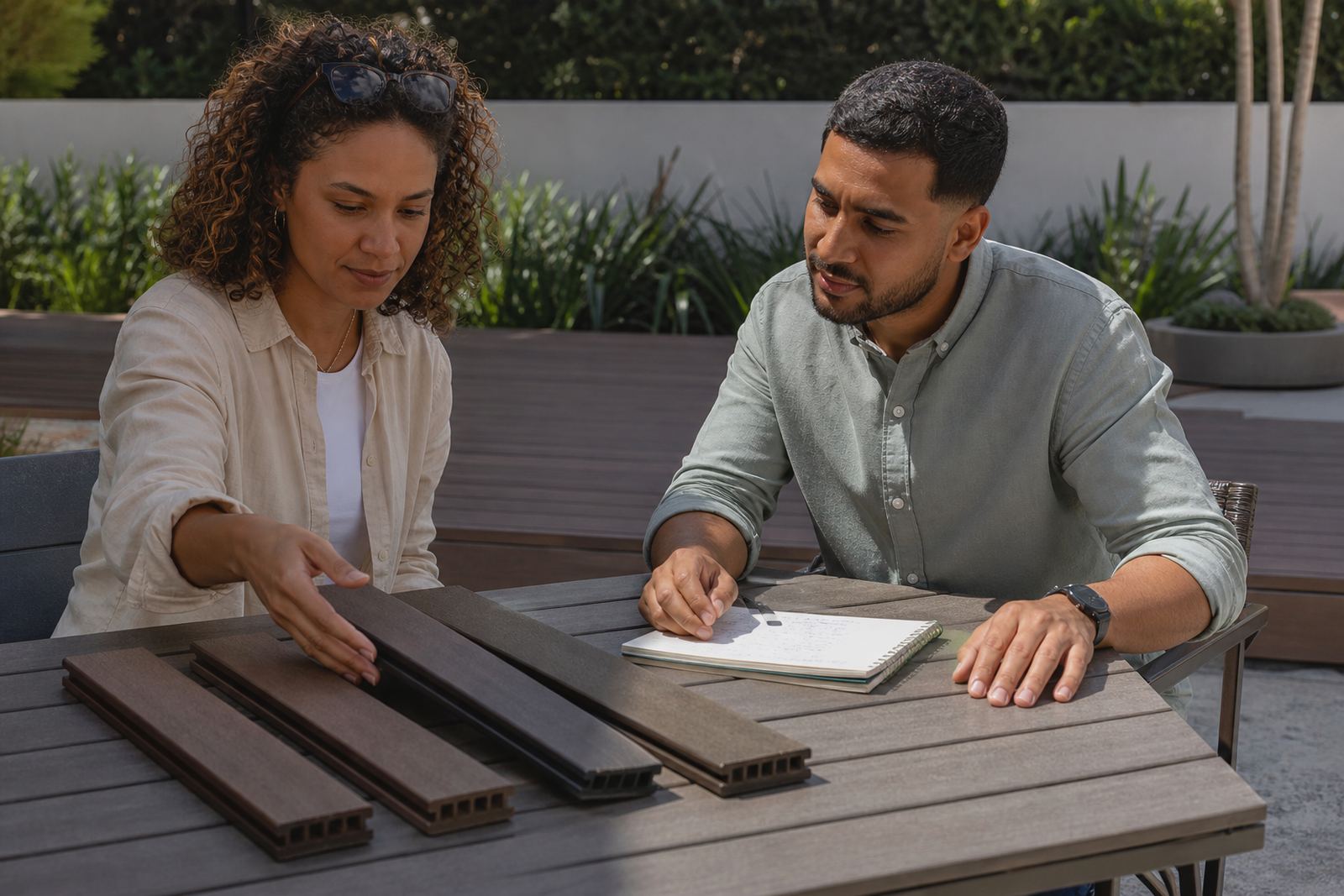
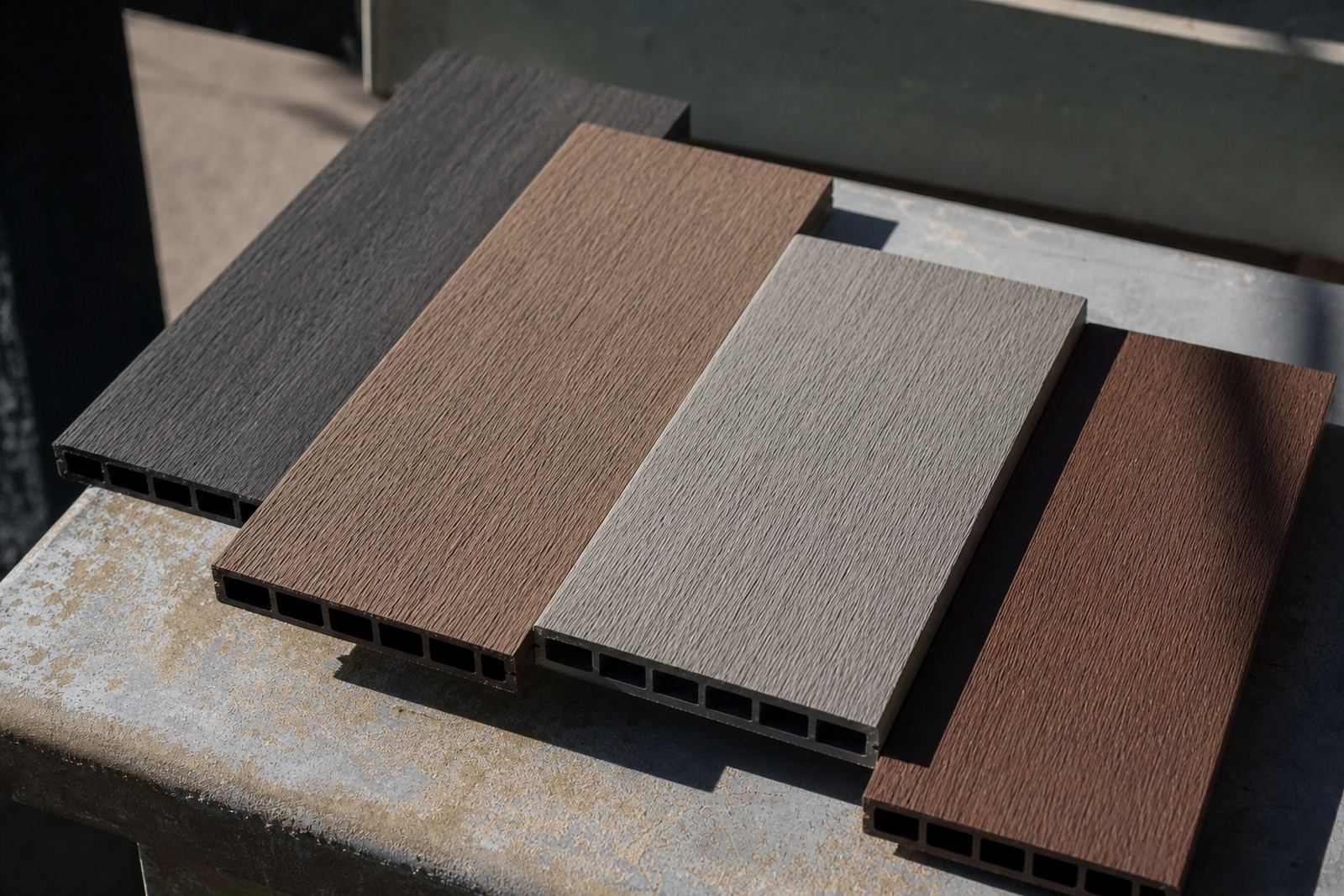
Not every poolside area needs the same board width, colour or fixing pattern. Darker tones can hold more heat in direct sun, which may matter in Durban or on an exposed rooftop pool in Cape Town. Lighter shades are often preferred for cooler underfoot comfort and a softer look beside planted borders. The profile and fixing method should suit the span, substructure and intended foot traffic.
Recycled plastic lumber is useful where moisture, salt air and cleaning water are constant. It can be a sensible choice near coastal homes and apartment pools because it resists rot and insect damage. It is also a practical option for benches beside the pool, where the same material can be used for matching seating and low maintenance finishes.
- Select board sizes that suit the deck shape and the available support structure.
- Match colours carefully to coping, paving and surrounding walls.
- Allow for expansion and movement in hot sun.
- Use compatible fixings and neat edge finishing for a clean result.
Check what installation will need on site
A proper site measure helps avoid problems once materials arrive. The team should check levels, drainage points, wall clearances and access for tools, especially where a pool sits in a narrow courtyard or behind an existing patio. In older homes and commercial properties, the substructure may need adjustment before decking is fitted.
Installation around a pool also needs a clear work sequence. First the layout is set, then the frame and supports, then the decking surface, and finally the edge finishing and cleanup. If the area includes benches, plan them at the same time so the deck and seating line up neatly. That saves later cutting and keeps the space easy to maintain.
- Confirm where materials can be delivered and stored safely.
- Check whether existing paving needs to stay in place or be altered.
- Identify any hidden pipes, cables or access covers.
- Plan installation around school holidays or peak guest use where needed.
Keep the pool deck tidy through the seasons
Poolside areas gather sunscreen, leaves, dust and foot marks. The good news is that recycled plastic lumber usually needs less upkeep than timber. Regular sweeping and a washdown are often enough for day to day care, although heavy dirt should be removed before it builds up in corners or around the bench feet. In coastal towns, rinse away salt more often to keep the surface looking even.
For a long service life, check fixings, joints and transitions a few times a year. If a board or component gets damaged, replacement can often be handled without disturbing the whole deck. That makes this material practical for homes, lodges and commercial pool areas where downtime must stay short.
- Sweep off sand, leaves and grit before they scratch the finish.
- Rinse after swimming parties, garden work or windy days.
- Inspect joints, corners and steps after winter rain.
- Ask for care advice if cleaning products or algae treatment are being used nearby.
Use benches to make the pool area more useful
Benches beside a pool are more than a place to sit. They give swimmers a spot to towel off, parents a place to keep watch and guests a dry edge away from the water. Recycled plastic lumber benches suit the same climate pressures as the decking, so the finishes can be matched for a neat overall look.
When benches are included, think about placement, airflow and how they will be used after a splash. A bench near a shaded corner may need different sizing from one beside a sunny entertainment area. For commercial sites in Johannesburg or Durban, a well planned bench line can help guide movement and keep the pool zone organised, even during busy periods.
For best results, match the bench position to the deck flow, not the other way around. That makes the whole area easier to clean and more comfortable to use, especially where children, guests and maintenance staff all move through the space.