
Start With the Space and the People Using It
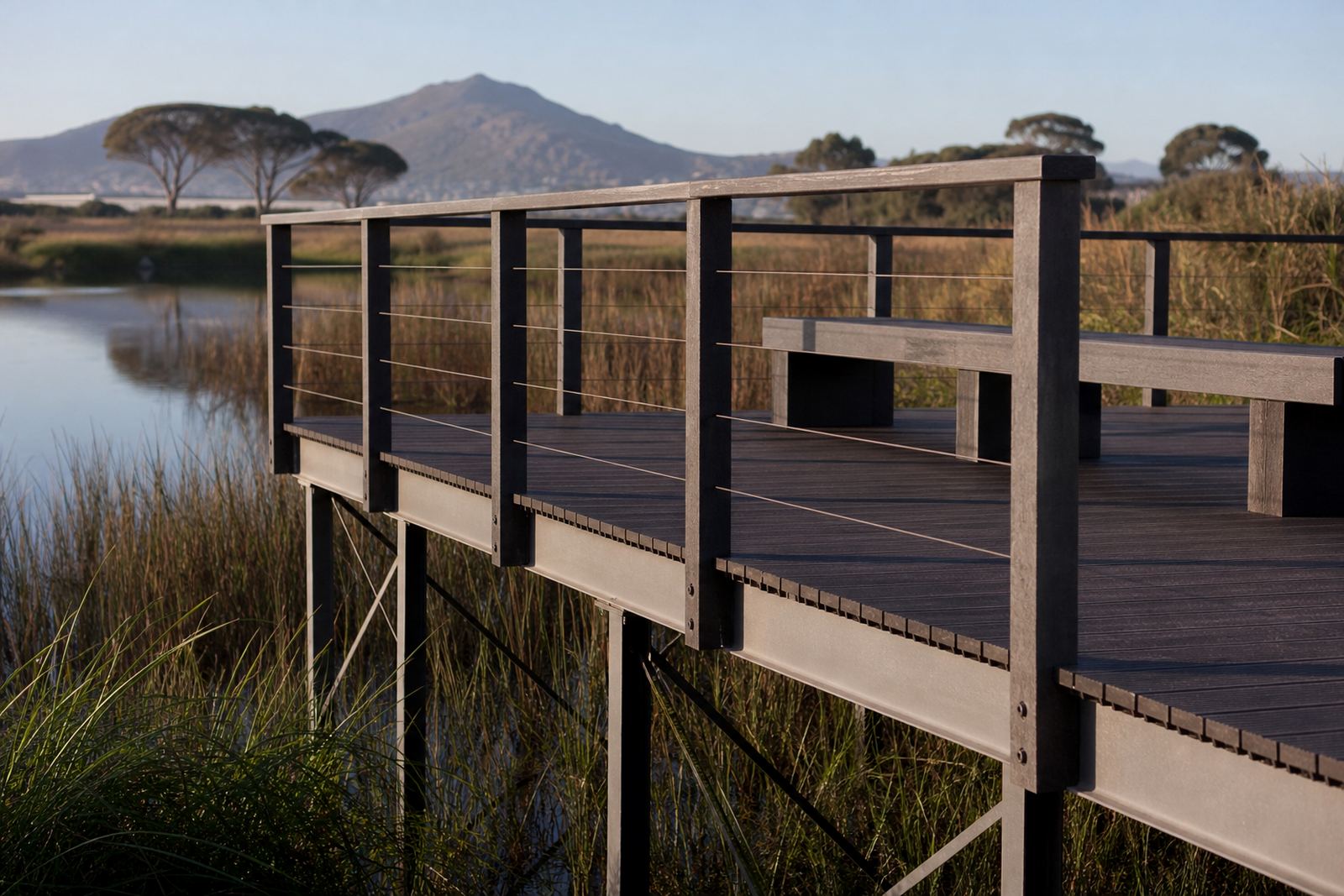
Before you buy benches, look at how the space works. A park in Cape Town may need seating that handles coastal humidity and salt air, while a campus in Johannesburg may need benches that cope with strong sun, dust and daily foot traffic. In Durban, drainage and damp conditions matter too, especially where benches sit near lawns, paths or water features.
Think about who will use the area. Public seating for a municipal park is not the same as seating for a school quadrangle, hospital entrance or civic plaza. Elderly visitors may need arm supports and a comfortable seat height, while students often need longer benches grouped near shaded spots. If the area is open to the public all day, a simpler shape with fewer loose parts usually makes maintenance easier.
Why Recycled Plastic Lumber Suits Outdoor Seating
Recycled plastic lumber is often used for public benches because it does not behave like timber in the weather. It does not need the same regular sealing, sanding or repainting that wood usually requires. That can be useful in places where maintenance teams are stretched, or where load-shedding and water restrictions make workshop work less convenient.
It is also a practical choice for sites that need a cleaner finish over time. Recycled plastic lumber does not splinter like some timber products, and it can be wiped down after dust, bird droppings or general grime. For projects close to the coast, or where benches are exposed to regular rain, that lower maintenance can make a real difference. It is still important to match the bench style to the site, because no material is right for every setting.
Checklist for Bench Design and Placement
Good bench placement can improve safety, comfort and the way people move through a site. A bench hidden behind a hedge or squeezed against a wall often gets ignored. One placed with a clear view of paths, shade and access routes is more useful and gets better use.
- Check the walking route so people do not have to step into traffic or service lanes.
- Allow enough space around the bench for wheelchairs, prams and cleaning access.
- Place seating where shade is available, or where shade can be added later.
- Avoid low spots where water pools after rain.
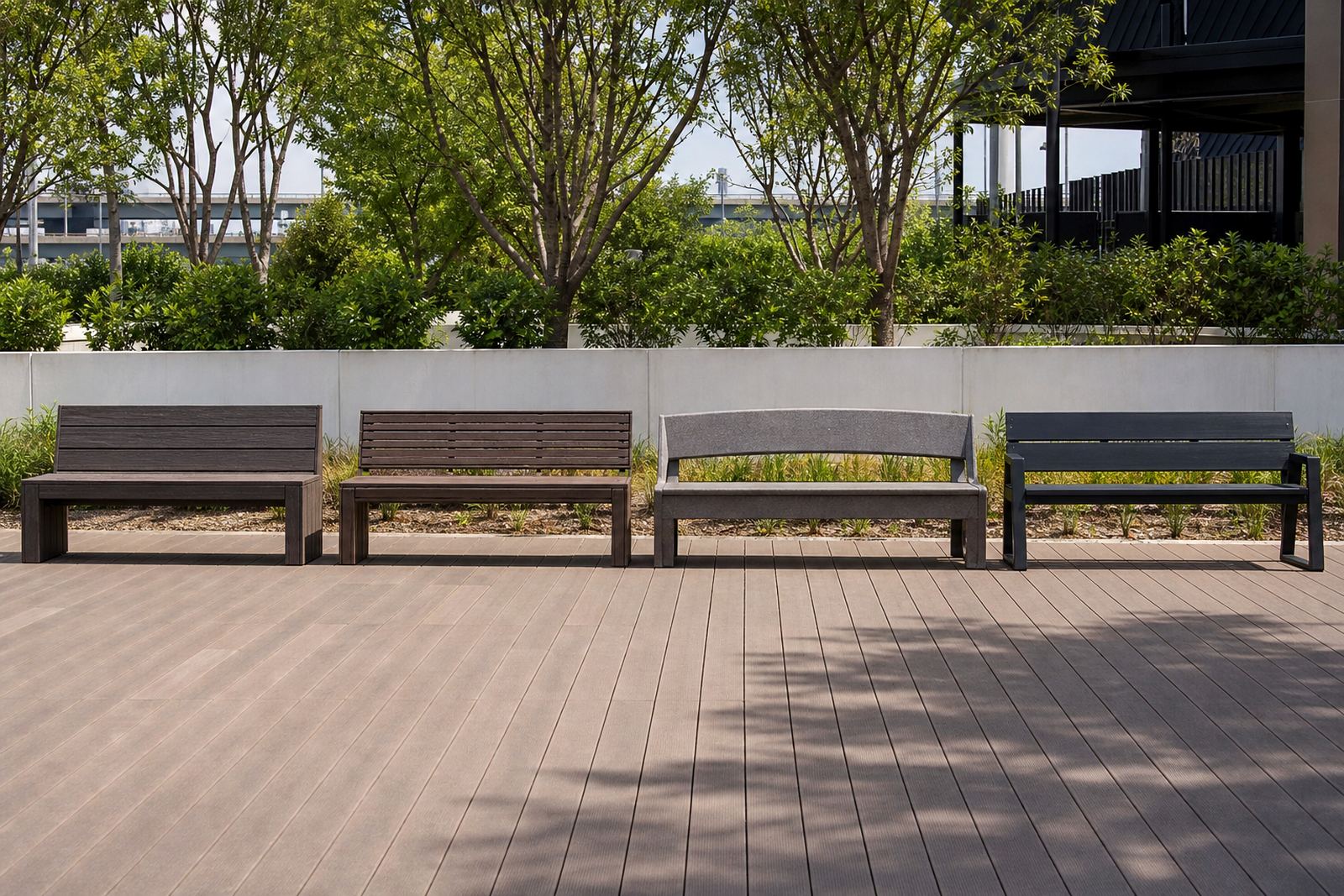
- Consider whether backrests and armrests are needed for comfort and support.
- Match bench length to the amount of foot traffic expected at peak times.
If a site has repeated vandalism or rough use, ask for a bench design that is simpler to maintain. Fewer joins and fewer exposed fixing points can help when benches need to be cleaned or repaired quickly.
What to Ask Before You Place an Order
When you are comparing options, ask for clear information on the dimensions, fixing method and recommended use. A bench that looks fine in a courtyard may not be suitable for a busy transport node or municipal park. You should also confirm whether the unit is supplied for surface mounting or another fixing arrangement, and whether the site surface can support that choice.
It helps to ask practical questions early so the project does not stall later. If the area is in a coastal town like George or Durban, ask how the materials handle moisture and sun exposure. If the site is in a high-traffic area in Bellville, Somerset West or Paarl, ask what kind of refurbishment or component replacement is available when a seat starts to show wear. For larger projects, trade support and delivery coordination can save time across multiple locations.
Working Through Installation, Refurbishment and Repairs
Public seating is easier to manage when the supplier can also help with installation and later upkeep. Site measures and layout planning help with correct positioning before any fixing starts. Once the benches are in place, neat edge finishing gives the seating area a cleaner look and reduces rough edges where people may catch clothing or brush against exposed ends.
Over time, some benches will need attention. Refurbishment can extend the working life of good seating, especially when the base is still sound. If a section has worn components, replacement of individual parts can be more sensible than removing the whole bench. That matters for schools, councils and property managers who need to control costs while keeping the site usable.
- Inspect benches after installation and again after the first season of heavy use.
- Check fixings, joins and surface wear before damage spreads.
- Schedule cleaning that suits the site, whether weekly or monthly.
- Keep a record of where each bench is installed for easier future servicing.
Planning for Parks, Campuses and Civic Areas
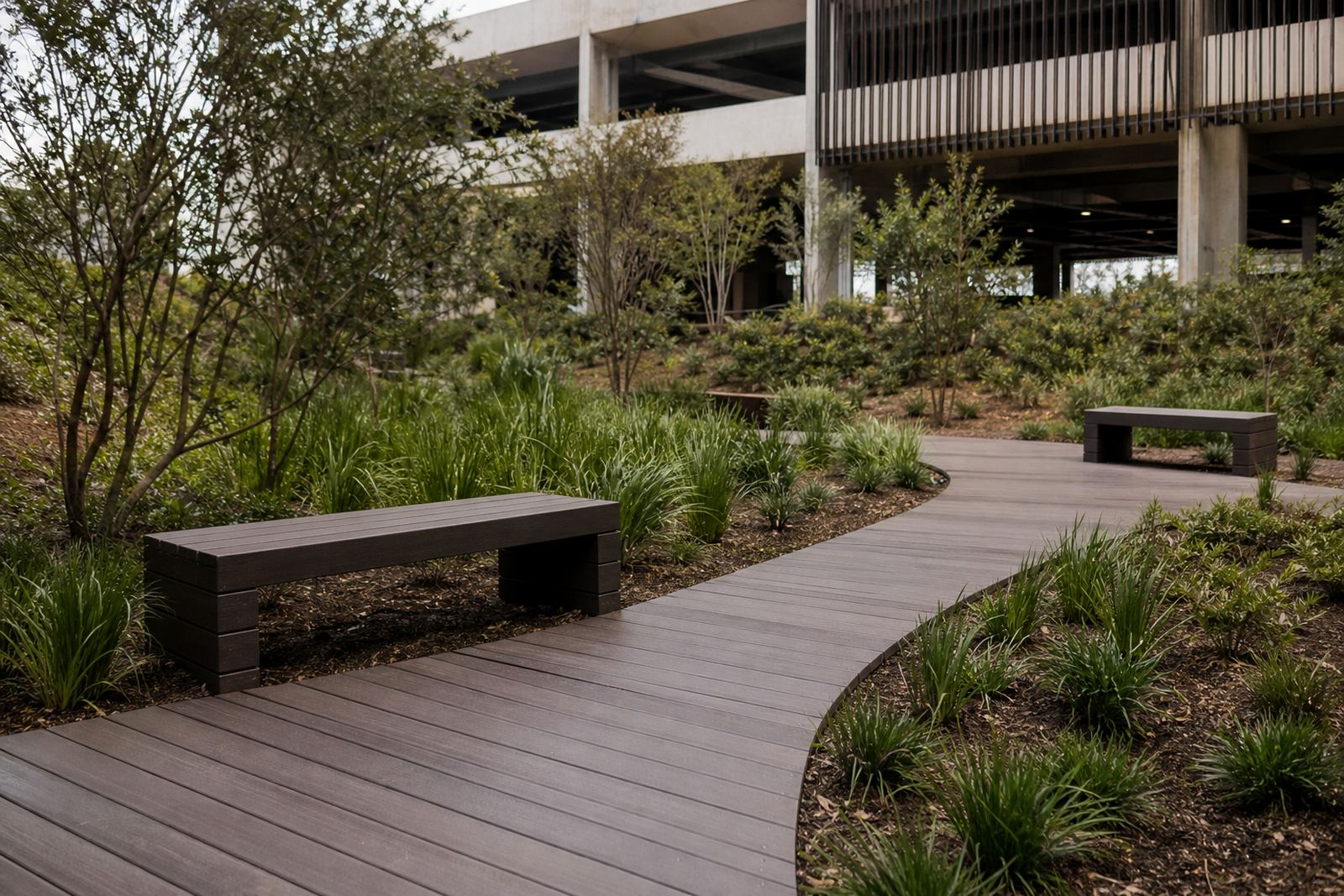
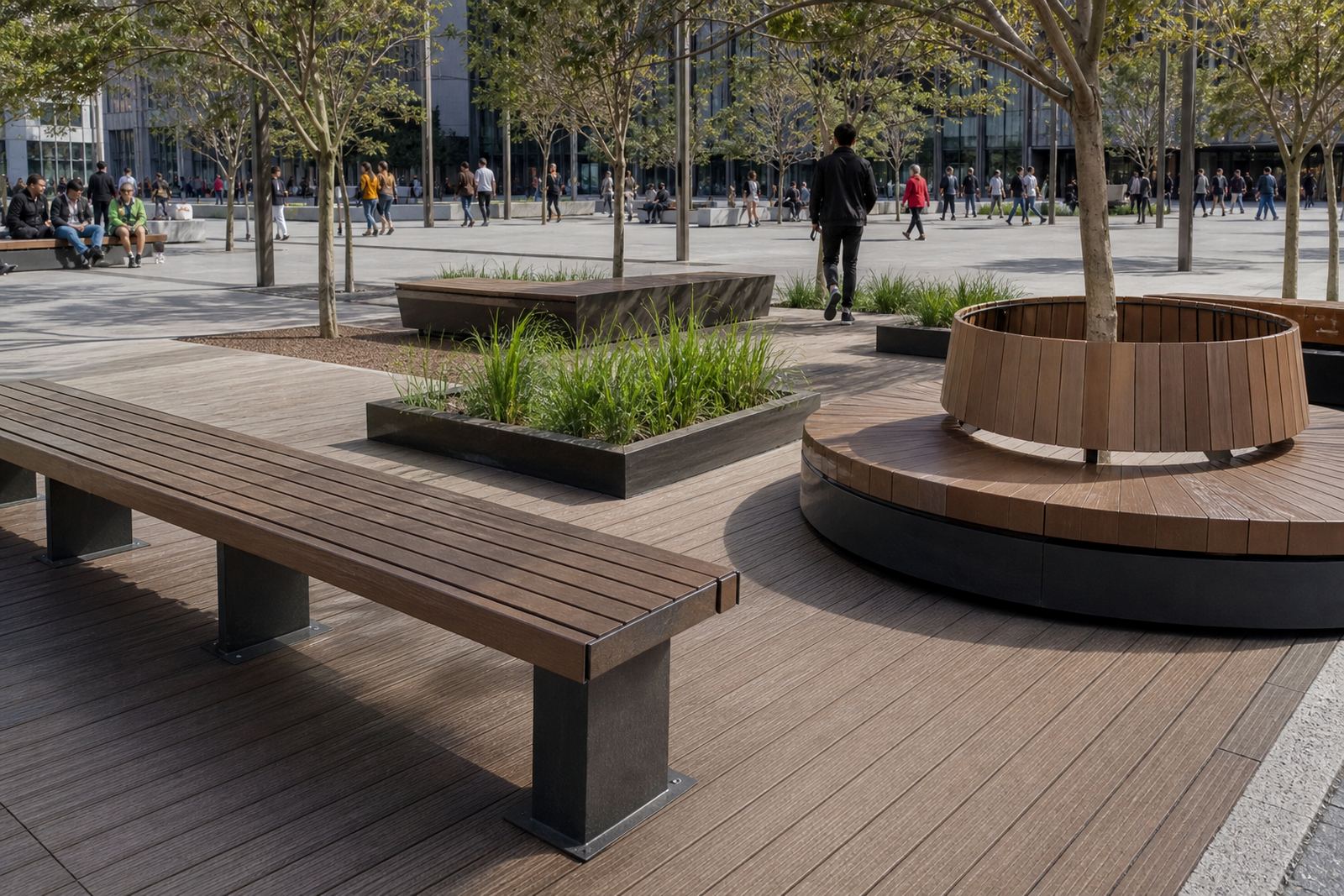
Different public spaces need different seating patterns. Parks often work best with scattered benches near trees, play areas and walking loops, while campuses may need long runs of seating near entrances, courtyards and waiting areas. Civic spaces usually need a balance of comfort, visibility and clear movement for crowds, deliveries and routine cleaning.
For projects across Cape Town, Stellenbosch, George, Johannesburg and Durban, it is worth planning delivery and staging as part of the order. A phased installation can help when work has to happen around school terms, municipal events or office hours. If the benches are being used in a mixed-use site, make sure the layout does not block access, bins, hydrants or service doors. Practical planning at the start can prevent a lot of complaints later.
At Plastimber in Paarden Eiland, Cape Town, public space seating is handled as part of a wider supply and support process. That includes material quoting, delivery coordination, deck and bench installation, refurbishment, care advice and trade support for projects in Cape Town, Stellenbosch, George, Johannesburg, Durban, Paarl, Somerset West and Bellville.