School spaces that need less upkeep and fewer repairs
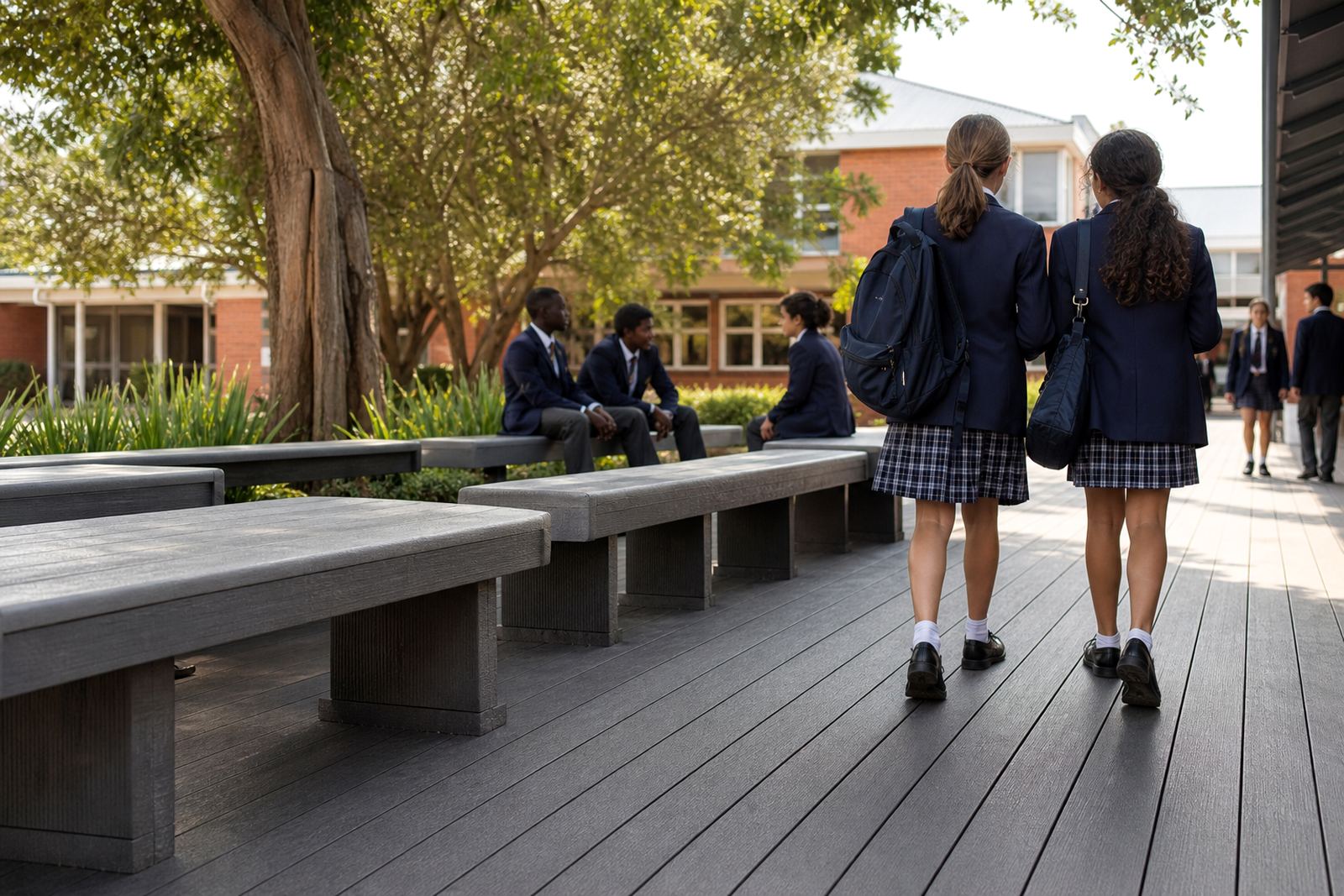
On school grounds, outdoor surfaces must handle thousands of footsteps, bag drops, rain, cleaning water and the odd scrape from moving furniture. Recycled plastic lumber is often chosen for these areas because it does not absorb moisture like timber, and it avoids many of the issues linked to rot, splitting and insect damage. In coastal towns such as Cape Town, Somerset West and Durban, that matters even more because humidity and salt air can shorten the life of traditional materials.
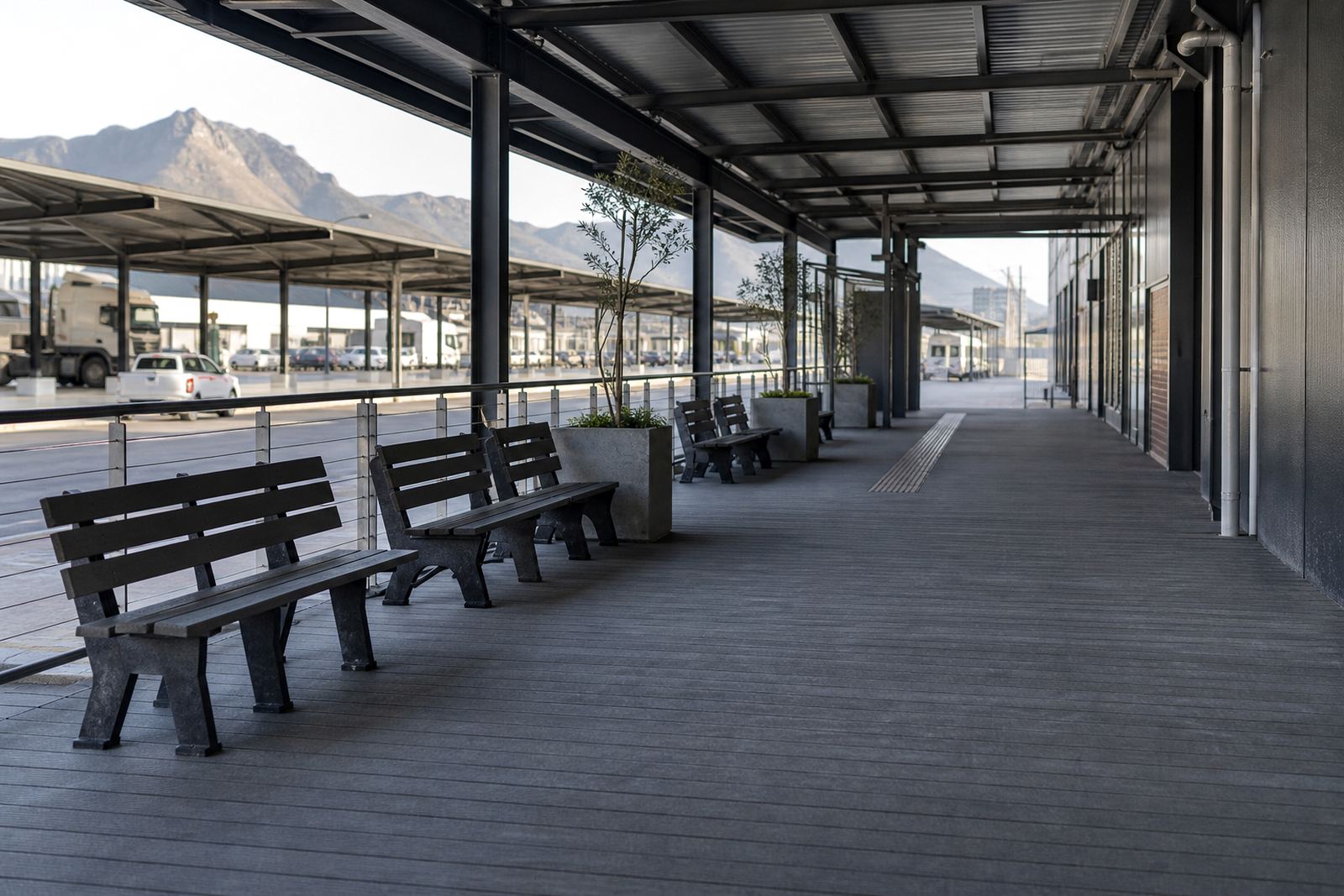
For schools, the main goal is simple: safe, tidy outdoor areas that stay usable with minimal maintenance. That suits benches, walkway sections, seating nooks, shaded rest points and raised edges around gardens or courtyards. It also helps where municipal cleaning routines and access control mean you need materials that are easy to wash down and keep orderly.
Typical school applications and what is usually supplied
The right set-up depends on age group, traffic flow and how the school uses the space during breaks, sports days and assemblies. Some schools need short seating runs near the tuckshop, while others need longer pathway sections between classrooms, halls and sports facilities. At campuses with large open areas, the same material can also be used for simple boundary edging and low maintenance seating around gathering points.
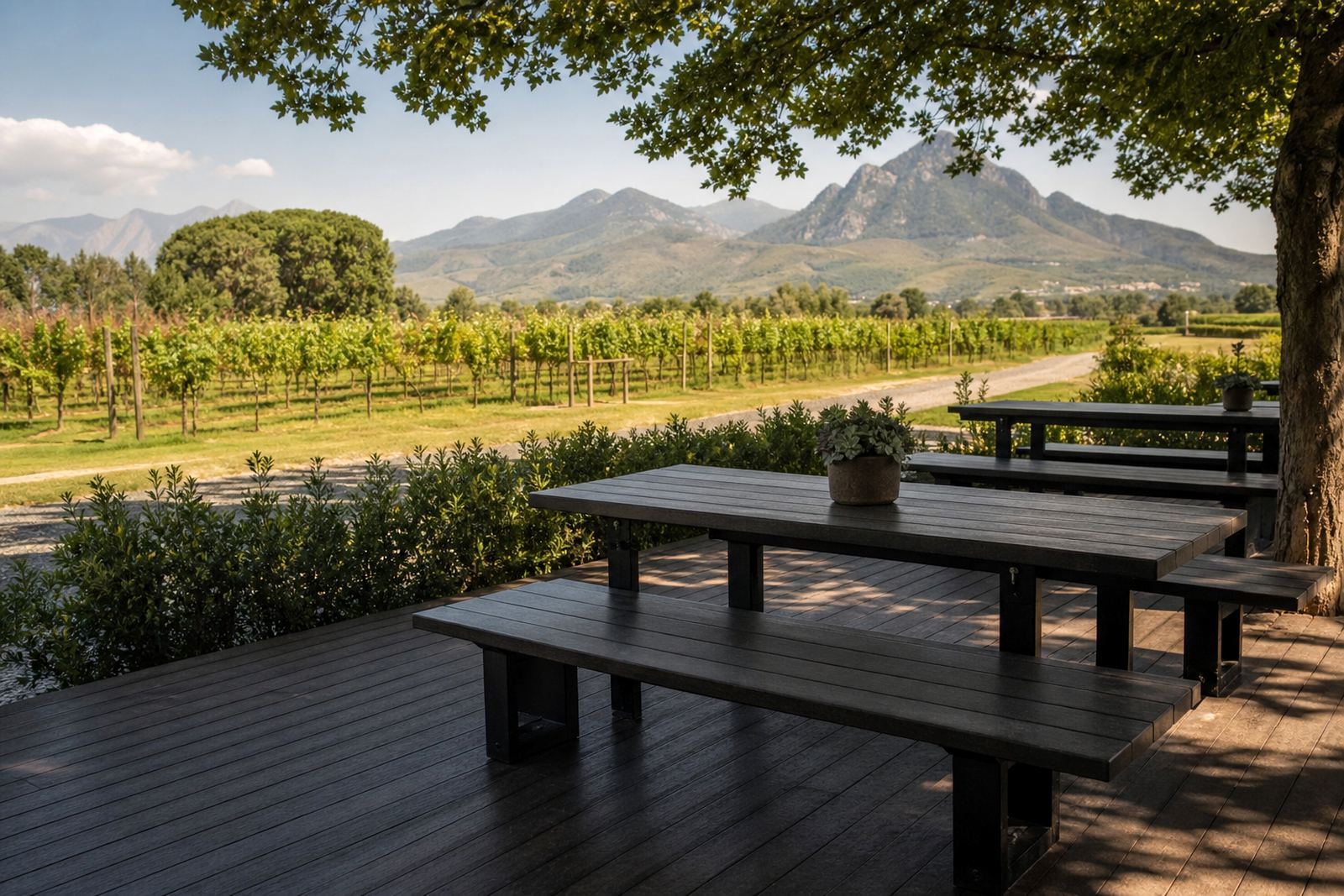
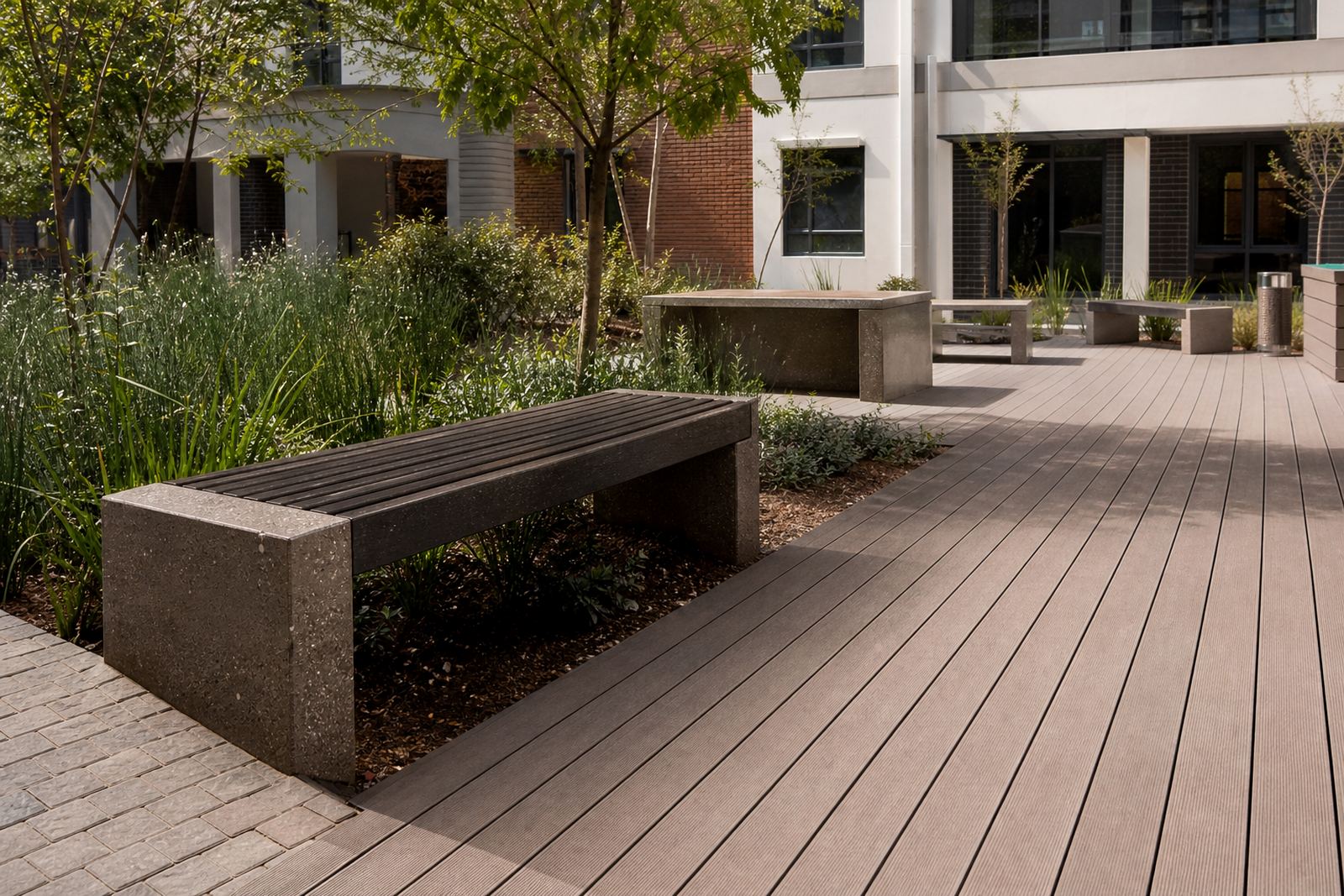
- Benches for break areas, assembly zones and shaded waiting areas
- Decking for courtyards, walkways and access strips between buildings
- Surface edging where paths meet lawns, gravel or planted areas
- Refurbishment of worn seating or surface components
- Replacement of damaged boards, supports or fittings
Because the material is made from recycled plastic lumber, it can suit both indoor-outdoor transition spaces and fully exposed areas. It is often preferred where children carry water bottles, lunch packs and sports gear, since the surfaces are easy to clean and do not need the same repainting cycle as timber.
Planning school layouts before any installation starts
A good layout saves time later. Site measures should be taken on the actual ground, not from old plans alone, because schools often have uneven courtyards, drainage falls, gate access limits and narrow service routes. The best projects start with walking the site, checking where learners queue, where staff supervise, and where water collects after rain.
For schools in Bellville, Paarl and Stellenbosch, sun exposure can be as important as foot traffic. In warmer months, a bench that faces full afternoon sun may become too hot to use comfortably. A pathway that crosses a flood-prone patch can also need better positioning or a change in layout. Good planning takes these small things into account before material is ordered.
- Check drainage and slope so surfaces do not hold standing water
- Allow enough width for learners, staff and maintenance carts
- Plan seating near supervision points, not hidden corners
- Keep edges neat where paving meets lawn or planted sections
- Leave space for future repairs or component replacement
Common mistakes schools make with outdoor benches and surfaces
One common mistake is choosing seating that looks fine in a catalogue but does not suit the actual school routine. Another is placing benches too close to walls, bins or gates, which creates bottlenecks during break times. In some cases, schools also under-size the seating area, then find learners standing around the bench because there is not enough room for the number using it daily.
Another issue is skipping proper edge finishing. Rough ends, uneven joins and loose fixings are small things at first, but they become wear points once hundreds of people use the area each week. Schools should also avoid mixing materials without a plan. Timber, steel and recycled plastic can all work together, but the fixing method, heights and finishes need to be thought through properly.
For campuses in Johannesburg and Durban, weather exposure and dust or moisture can make rushed installs show problems quickly. It is better to get the measurements, layout and delivery sequence right from the start than to deal with early movement or patch repairs later.
Budget ranges and what affects the final Rand figure
Budgeting for a school project is usually about size, access and how much preparation the site needs. A small bench replacement or a short seating run will cost far less than a full courtyard surface with several access points. Delivery distance, installation complexity and whether old components need to be removed can also affect the final figure.
Schools should budget for more than just the materials. Site measures, layout planning, delivery coordination, installation and any refurbishment work all play a part. If the project is being done in stages, that can help with cash flow, but the sequence should still be planned so later sections join neatly to earlier ones.
- Smaller bench or component replacement jobs can start at a lower spend level
- Mid-sized seating and path sections usually sit in a moderate project range
- Larger campus installs and multiple areas can move into a higher Rand budget
- Refurbishment is often cheaper than full replacement when the base structure is still sound
For a school, the right spend is usually the one that reduces maintenance and lasts through daily use without constant patching. That is often where recycled plastic lumber gives good value over time.
Working with a South African supplier from enquiry to handover
Plastimber is based in Paarden Eiland, Cape Town and works with schools across Cape Town, Stellenbosch, George, Johannesburg and Durban, as well as Paarl, Somerset West and Bellville. Since 2009, the focus has been on practical outdoor solutions that fit local conditions and real site constraints. Clients reach the team through the enquiry form on the contact page, then the next step is usually a site discussion, measurements and a clear material plan.
The team can assist with trade support, delivery coordination, deck installation, bench installation, refurbishment and replacement work. That matters for schools because projects often need to be scheduled around terms, exams, sports events and holiday closures. A good handover also includes care advice, so the school knows how to clean the surface, check fixings and keep the area looking tidy through the year.