What transport hubs need from outdoor seating
Station forecourts, bus ranks and pedestrian links put furniture under daily pressure. People sit briefly, lean heavily, drag bags across surfaces and expect clean, safe spaces that do not become rough or splintered over time. In Cape Town, Stellenbosch, George, Johannesburg and Durban, the weather adds another layer too, from salt air and mist to harsh sun and summer storms.
Recycled plastic lumber works well in these settings because it does not behave like timber in the same way. It does not need regular sealing, and it is less likely to crack, warp or splinter. That makes it a practical choice for public areas where maintenance windows are tight and surfaces must stay serviceable for longer.
- Station forecourts and taxi or bus waiting zones
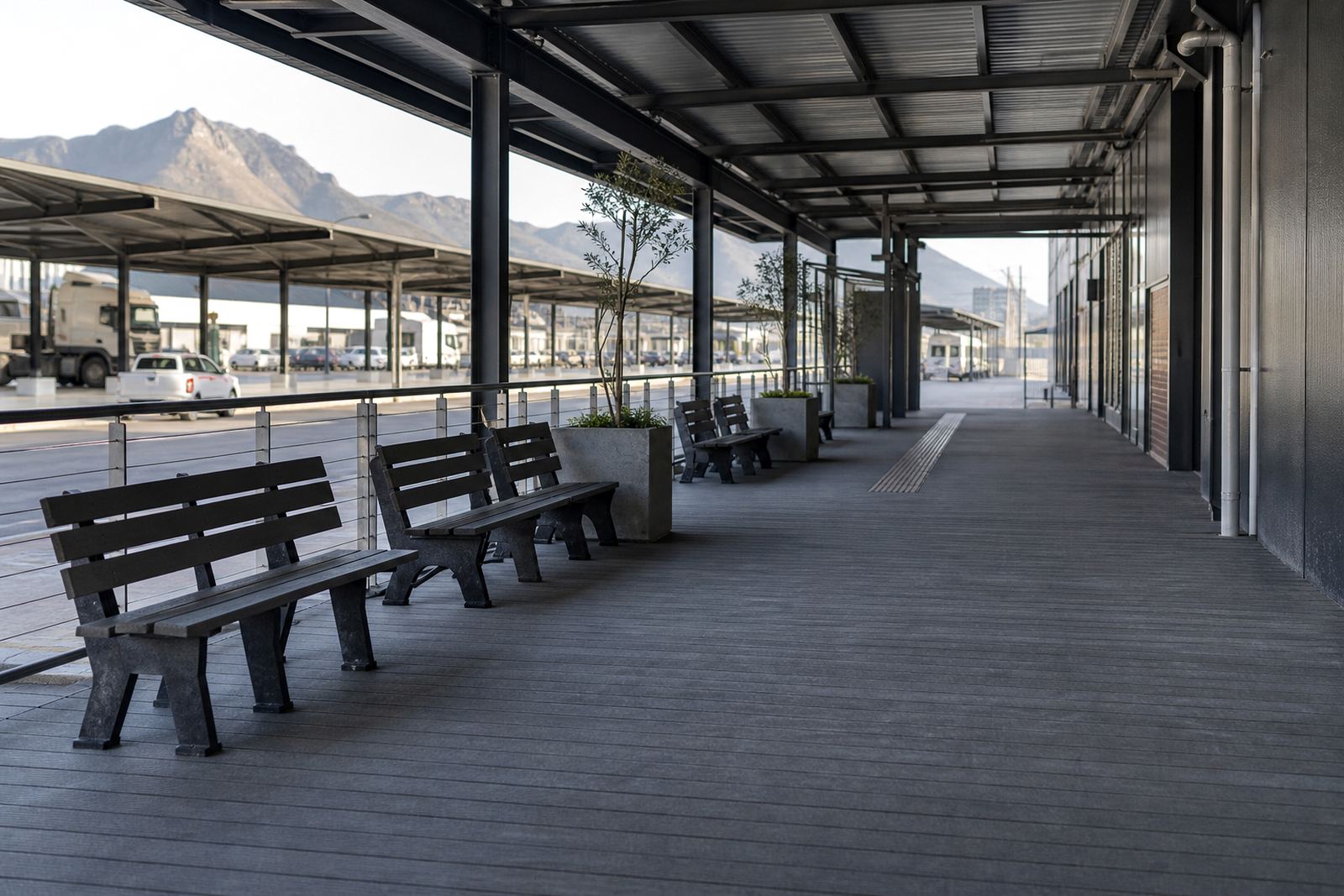
- Covered pedestrian links and platform edges
- Public rest areas near ticketing or security points
- Municipal walkways beside transport interchanges
Typical products used in these spaces
For transport hubs, the usual set includes bench seating, decking for raised or level waiting platforms, edge trims and replacement components for worn sections. Some sites need only a few benches at a sheltered point, while others call for full seating runs with access paths and clear circulation around gates, queues and signboards.
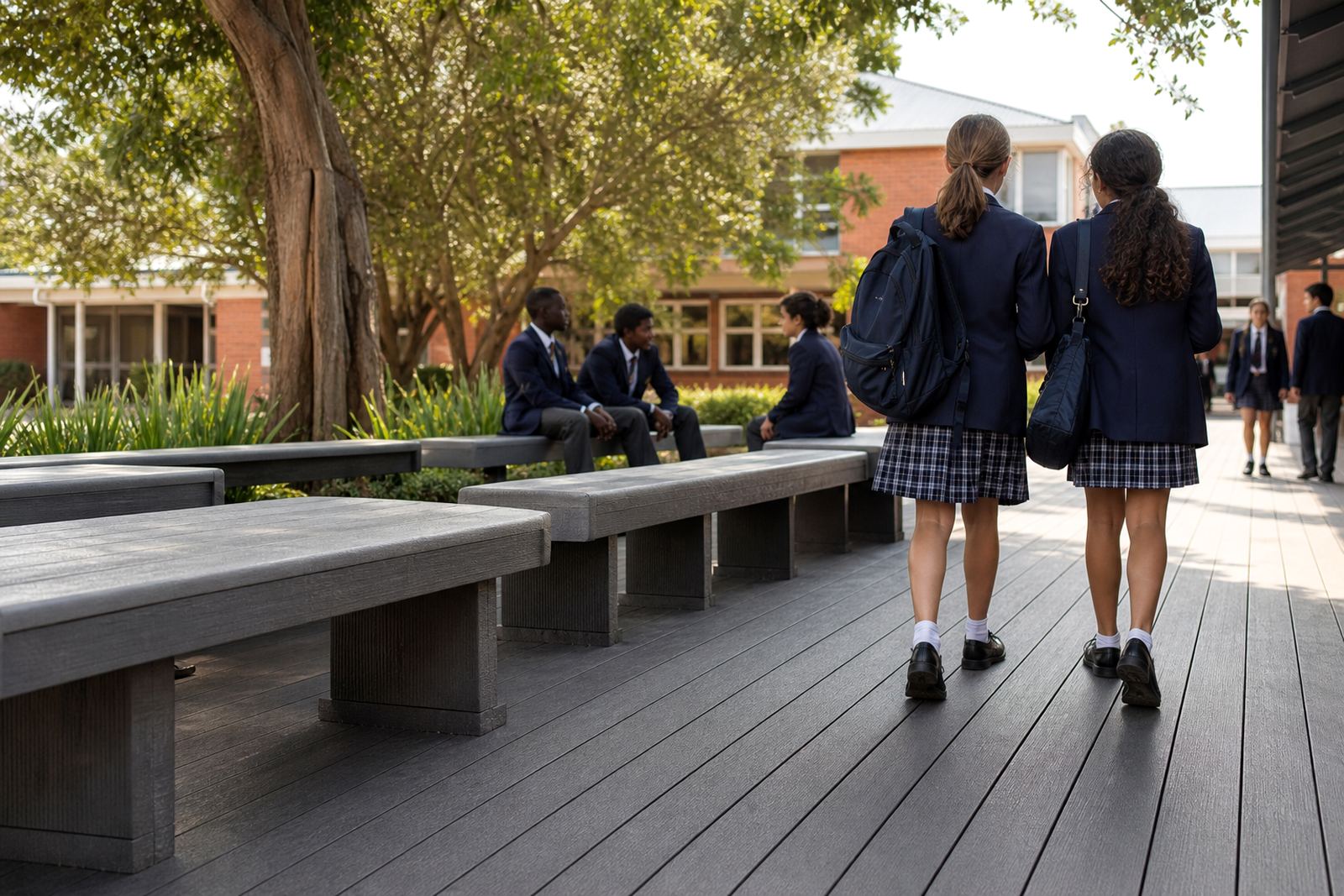
The material is often selected in darker or neutral tones so it sits well in a public setting and shows less surface marking. It can be cut and fixed into custom lengths for narrow platforms, wraparound corners or linear seating edges. If a site already has concrete slabs or steel framing, the deck boards or bench slats can usually be planned to suit those conditions with less disruption.
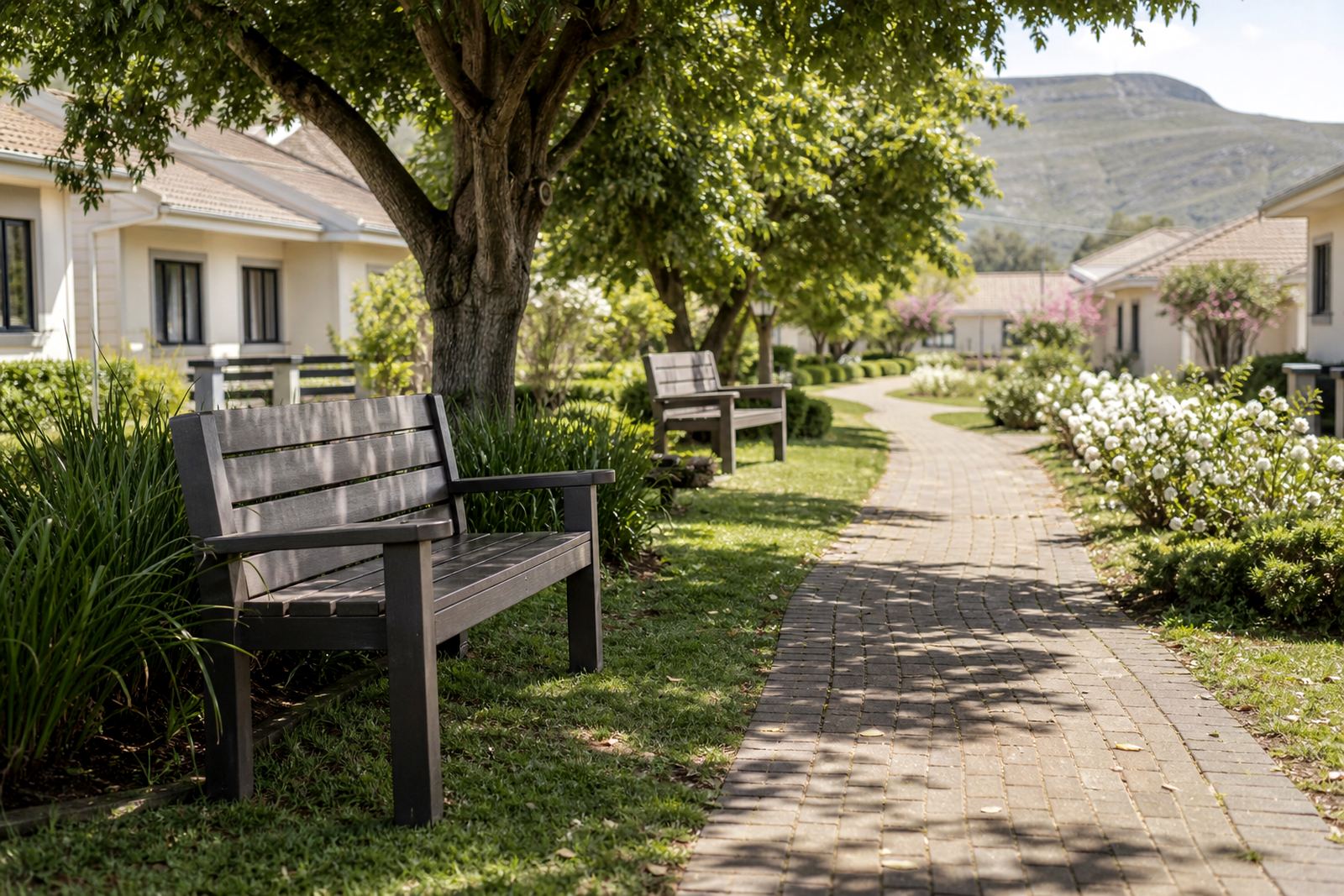
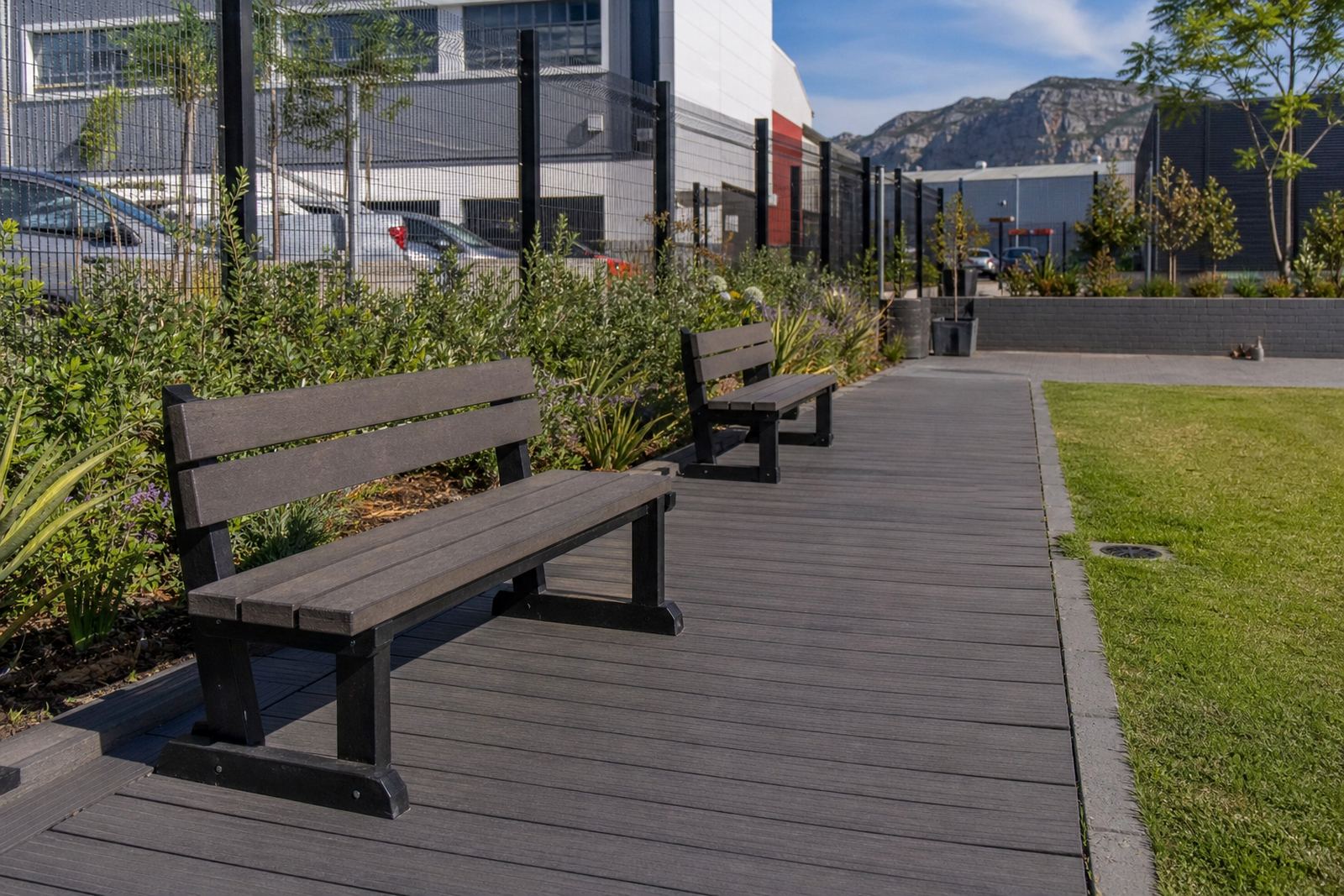
- Fixed benches for waiting areas and concourses
- Decking for raised platforms, walk lanes or seating plinths
- Replacement slats and components for refurbishment work
- Edge finishing for safer transitions and neater terminations
Planning for foot traffic, shade and access
Good planning starts with movement. A transport hub has queues, crossings, luggage flow and people who may need to sit down quickly. Layout must leave enough space for wheelchairs, prams and bags, while keeping benches out of the direct path of boarding and alighting traffic. It also helps to think about where the shade falls during the day, because a seat in full afternoon sun is less useful in Durban or Johannesburg.
Our team can assist with site measures, layout planning and material quoting so the seating fit is based on actual site conditions, not guesswork. In Paarden Eiland and other coastal areas, drainage and airflow matter too. If water pools under seating or against deck ends, cleaning gets harder and the surface wears unevenly over time. A little planning now avoids a lot of call backs later.
- Keep clear access routes for movement and emergency use
- Allow enough spacing for bags, trolleys and waiting crowds
- Plan for shade, water run-off and safe cleaning access
- Check fixings and substructure compatibility before ordering
Common mistakes at stations and taxi ranks
The biggest mistake is choosing a product that looks neat but cannot handle the daily punishment of a transport site. Thin seating members, poor fixings and awkward layouts all cause trouble quickly. Another issue is underestimating how people actually use the space. A bench placed too close to a turning point or queue line gets knocked, moved or blocked.
Some sites also ignore the maintenance side. A surface that traps dirt, or a design that makes cleaning difficult, will start looking tired far sooner than it should. In public spaces, that matters because the first impression is formed in seconds. Better to specify simple details from the start, like smooth edge finishing, practical heights and easy access for sweeping and wash-down.
We also see projects where the wrong material is used near damp or coastal conditions. In places like George, Somerset West and Durban, constant moisture can speed up deterioration in less suitable materials. Recycled plastic lumber is not a cure for poor planning, but it does give a more dependable base for these exposed areas.
Budget ranges for transport hub projects
Budgets vary widely because transport hubs range from a small sheltered stop to a full interchange with multiple waiting areas. The total depends on site size, number of benches, layout complexity, delivery distance and whether installation or refurbishment is required. Replacement components can keep costs manageable when the underlying structure is still sound.
As a broad guide, smaller seating upgrades may sit in the low thousands of Rand, while larger deck and bench installations for busy public areas can move into a higher project budget. If you are working to a municipal or commercial allowance, the best approach is to quote by area and by item so decisions are clear from the beginning. That also helps when the scope changes and the budget needs to stay under control.
- Small bench-only upgrades for compact waiting zones
- Mid-size deck and seating combinations for forecourts
- Full refurbishment work where existing components are reused
- Delivery and installation for sites in Cape Town, Johannesburg, Durban and beyond
Delivery, installation and trade support from Paarden Eiland
Plastimber is based in Paarden Eiland, Cape Town and supplies recycled plastic lumber decking and benches across South Africa. Our work covers Cape Town, Stellenbosch, George, Johannesburg, Durban, Paarl, Somerset West and Bellville, with logistics arranged to suit the site and timing. For projects with tighter access or staggered work, we can help coordinate the sequence so the site stays functional.
The team includes Morne van Zyl as MD, with support from Anele Mkhize in Sales, Bianca Fourie in Projects, Thabo Molefe in Production, Leanne Naidoo in Customer Support, Jason Petersen in Installation and Sibusiso Dlamini in Logistics. Clients reach us through the enquiry form on our contact page, and we then help with measures, quoting, delivery coordination, installation, refurbishment or component replacement as needed. It is straightforward support, but it saves time when the site has to stay open.
For transport hubs, the aim is simple: seating and decking that stay practical, clean and serviceable with less day-to-day fuss. That is especially useful where staff are already dealing with crowd flow, cleaning and weather, and no one has time for extra maintenance.